Publications

Resolving Rho1

Published 1 September 2023 in Neuron (doi 10.1016/j.neuron.2023.08.006):

Structure and dynamics of differential ligand binding in the human ρ-type GABAA receptor

John Cowgill*, Chen Fan*, Nandan Haloi, Yuxuan Zhuang, Rebecca J Howard°, Erik Lindahl°

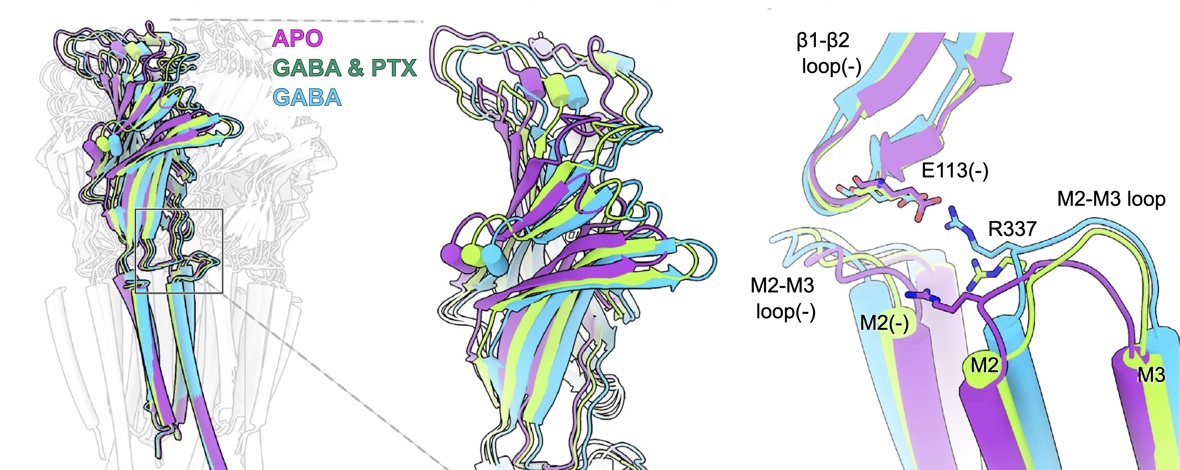
The neurotransmitter γ-aminobutyric acid (GABA) drives critical inhibitory processes in and beyond the nervous system, partly via ionotropic type-A receptors (GABAARs). Pharmacological properties of ρ-type GABAARs are particularly distinctive, yet the structural basis for their specialization remains unclear. Here, we present cryo-EM structures of a lipid-embedded human ρ1 GABAAR, including a partial intracellular domain, under apo, inhibited, and desensitized conditions. An apparent resting state, determined first in the absence of modulators, was recapitulated with the specific inhibitor (1,2,5,6-tetrahydropyridin-4-yl)methylphosphinic acid and blocker picrotoxin and provided a rationale for bicuculline insensitivity. Comparative structures, mutant recordings, and molecular simulations with and without GABA further explained the sensitized but slower activation of ρ1 relative to canonical subtypes. Combining GABA with picrotoxin also captured an apparent uncoupled intermediate state. This work reveals structural mechanisms of gating and modulation with applications to ρ-specific pharmaceutical design and to our biophysical understanding of ligand-gated ion channels.

*Contributed equally
°Corresponding authors

Read the full publication here.
Publications

New Sites for Steroids

Published 22 August 2023 in Nature Communications (doi 10.1038/s41467-023-40800-1):

Structural insights into opposing actions of neurosteroids on GABAA receptors

Dagimhiwat H Legesse, Chen Fan, Jinfeng Teng, Yuxuan Zhuang, Rebecca J Howard, Colleen M Noviello, Erik Lindahl, Ryan E Hibbs

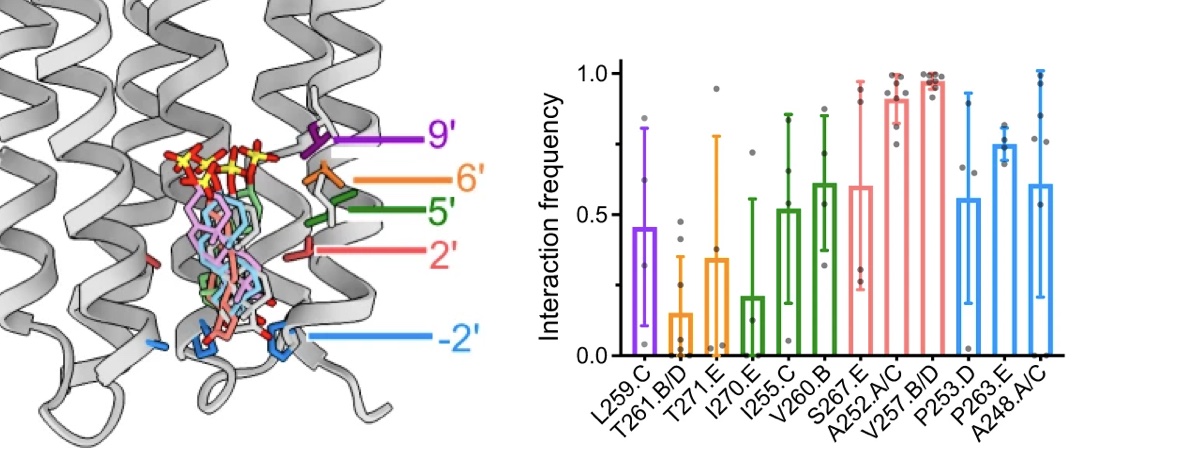
γ-Aminobutyric acid type A (GABAA) receptors mediate fast inhibitory signaling in the brain and are targets of numerous drugs and endogenous neurosteroids. A subset of neurosteroids are GABAA receptor positive allosteric modulators; one of these, allopregnanolone, is the only drug approved specifically for treating postpartum depression. There is a consensus emerging from structural, physiological and photolabeling studies as to where positive modulators bind, but how they potentiate GABA activation remains unclear. Other neurosteroids are negative modulators of GABAA receptors, but their binding sites remain debated. Here we present structures of a synaptic GABAA receptor bound to allopregnanolone and two inhibitory sulfated neurosteroids. Allopregnanolone binds at the receptor-bilayer interface, in the consensus potentiator site. In contrast, inhibitory neurosteroids bind in the pore. MD simulations and electrophysiology support a mechanism by which allopregnanolone potentiates channel activity and suggest the dominant mechanism for sulfated neurosteroid inhibition is through pore block.

Read the full publication here.

News

EBSA-Stockholm 2023

More than twenty current and former members of Molecular Biophysics Stockholm had the rare opportunity to be visited by over 1000 scientists at the biannual Congress of the European Biophysical Societies’ Association (EBSA), held 31 July–4 August for its first time in Stockholm. The event culminated months of preparation by Congress Co-Chair Erik Lindahl, and included selected oral presentations by Nandan Haloi and Marie Lycksell, as well as poster awards to Anton Jansen and Antoni Marciniak (pictured at bottom).

Publications

Density Fitting, Fast & Gentle

Published online 31 July 2023 in PLOS Computational Biology (doi 10.1371/journal.pcbi.1011255):

Gentle and fast all-atom model refinement to cryo-EM densities via a maximum likelihood approach

Christian Blau, Linnea YvonnesdotterErik Lindahl

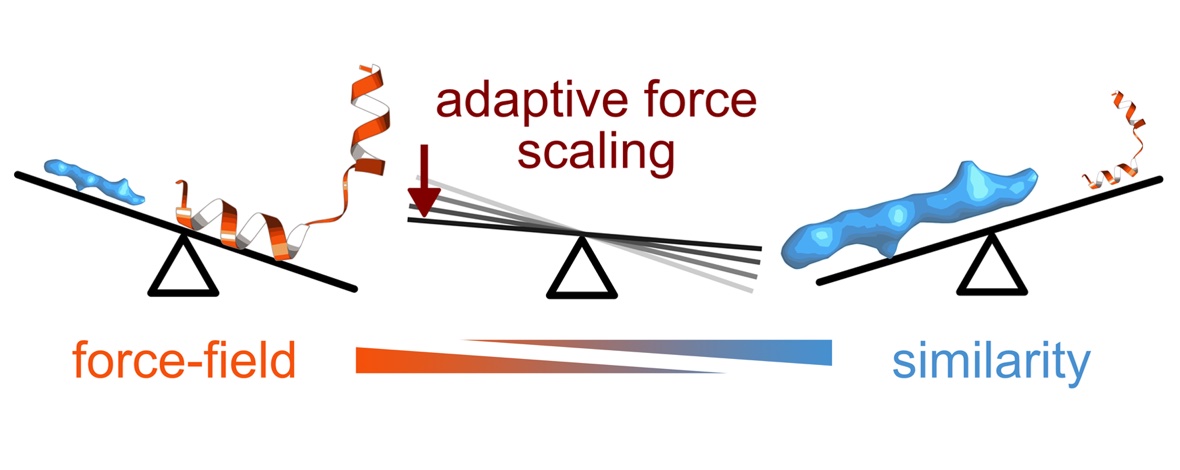
Better detectors and automated data collection have generated a flood of high-resolution cryo-EM maps, which in turn has renewed interest in improving methods for determining structure models corresponding to these maps. However, automatically fitting atoms to densities becomes difficult as their resolution increases and the refinement potential has a vast number of local minima. In practice, the problem becomes even more complex when one also wants to achieve a balance between a good fit of atom positions to the map, while also establishing good stereochemistry or allowing protein secondary structure to change during fitting. Here, we present a solution to this challenge using a maximum likelihood approach by formulating the problem as identifying the structure most likely to have produced the observed density map. This allows us to derive new types of smooth refinement potential—based on relative entropy—in combination with a novel adaptive force scaling algorithm to allow balancing of force-field and density-based potentials. In a low-noise scenario, as expected from modern cryo-EM data, the relative-entropy based refinement potential outperforms alternatives, and the adaptive force scaling appears to aid all existing refinement potentials. The method is available as a component in the GROMACS molecular simulation toolkit.

Read the full publication here.

Publications

MD-Fitting a Membrane Protein

Published 11 July 2023 in Biophysical Journal (doi 10.1016/j.bpj.2023.05.033):

Automated simulation-based membrane protein refinement into cryo-EM data

Linnea Yvonnesdotter, Urška Rovšnik, Christian Blau, Marie Lycksell, Rebecca J Howard, Erik Lindahl

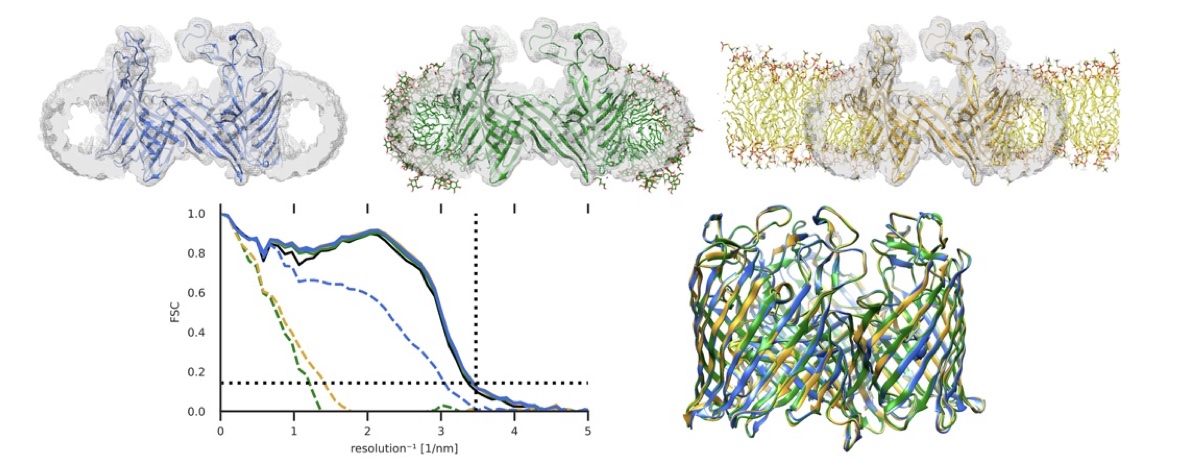
The resolution revolution has increasingly enabled single-particle cryogenic electron microscopy (cryo-EM) reconstructions of previously inaccessible systems, including membrane proteins—a category that constitutes a disproportionate share of drug targets. We present a protocol for using density-guided molecular dynamics simulations to automatically refine atomistic models into membrane protein cryo-EM maps. Using adaptive force density-guided simulations as implemented in the GROMACS molecular dynamics package, we show how automated model refinement of a membrane protein is achieved without the need to manually tune the fitting force ad hoc. We also present selection criteria to choose the best-fit model that balances stereochemistry and goodness of fit. The proposed protocol was used to refine models into a new cryo-EM density of the membrane protein maltoporin, either in a lipid bilayer or detergent micelle, and we found that results do not substantially differ from fitting in solution. Fitted structures satisfied classical model-quality metrics and improved the quality and the model-to-map correlation of the x-ray starting structure. Additionally, the density-guided fitting in combination with generalized orientation-dependent all-atom potential was used to correct the pixel-size estimation of the experimental cryo-EM density map. This work demonstrates the applicability of a straightforward automated approach to fitting membrane protein cryo-EM densities. Such computational approaches promise to facilitate rapid refinement of proteins under different conditions or with various ligands present, including targets in the highly relevant superfamily of membrane proteins.

Read the full publication here.

News

Grattis till Dr Bergh

Members of Molecular Biophysics Stockholm joined family and friends in celebrating Cathrine Bergh’s successful spikning and defense of her PhD from KTH in Applied Physics, From static structures to free energy landscapes: characterizing conformational transitions in biological macromolecules. Cathrine nailed her thesis on 29 May, and defended it 13 June at SciLifeLab, with Professor Gerhard Hummer (Max Planck Institute of Biophysics) as opponent. Professor Erik Lindahl and Ligand-Gated Ion Channels team-lead Reba Howard led a toast to their advisee of over five years, as she prepares to join the GROMACS software development team.

Publications

Ivermectin by NMR

Published 23 February 2023 in ACS Chemical Neuroscience (doi 10.1021/acschemneuro.2c00783):

Structural elucidation of ivermectin binding to α7nAChR and the induced channel desensitization

Vasyl Bondarenko, Qiang Chen, Kevin Singewald, Nandan Haloi, Tommy S. Tillman, Rebecca J HowardErik Lindahl, Yan Xu, Pei Tang

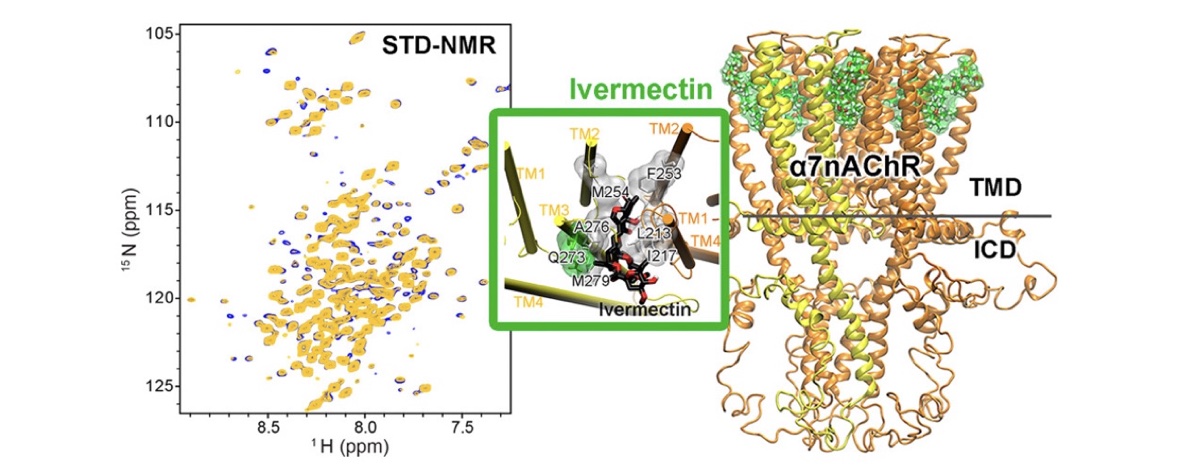
The α7 nicotinic acetylcholine receptor (α7nAChR) mediates signaling in the central nervous system and cholinergic anti-inflammatory pathways. Ivermectin is a positive allosteric modulator of a full-length α7nAChR and an agonist of the α7nAChR construct containing transmembrane (TMD) and intracellular (ICD) domains, but structural insights of the binding have not previously been determined. Here, combining nuclear magnetic resonance as a primary experimental tool with Rosetta comparative modeling and molecular dynamics simulations, we have revealed details of ivermectin binding to the α7nAChR TMD + ICD and corresponding structural changes in an ivermectin-induced desensitized state. Ivermectin binding was stabilized predominantly by hydrophobic interactions from interfacial residues between adjacent subunits near the extracellular end of the TMD, where the inter-subunit gap was substantially expanded in comparison to the apo structure. The ion-permeation pathway showed a profile distinctly different from the resting-state profile but similar to profiles of desensitized α7nAChR. The ICD also exhibited structural changes, including reorientation of the MX and h3 helices relative to the channel axis. The resulting structures of the α7nAChR TMD + ICD in complex with ivermectin provide opportunities for discovering new modulators of therapeutic potential and exploring the structural basis of cytoplasmic signaling under different α7nAChR functional states.

Read the full publication here.

News

Grattis till Licentiate Yvonnesdotter

Members of Molecular Biophysics Stockholm joined family and friends in celebrating Linnea Yvonnesdotter’s licentiate in Biophysics, Intersection of model and experiments: Combining cryo-electron microscopy data and molecular dynamics simulations. Linnea defended on 24 January at Stockholm University, with Dr Erik Marklund (Uppsala University) as opponent. Professor Erik Lindahl and Ligand-Gated Ion Channels team-lead Reba Howard led a toast to their advisee of over four years.

Publications

Pi in the Gating Cycle of NavAb

Published 14 December 2022 in Journal of General Physiology (doi 10.1085/jgp.202213214):

An α–π transition in S6 shapes the conformational cycle of the bacterial sodium channel NavAb

Koushik Choudhury, Rebecca J Howard, Lucie Delemotte

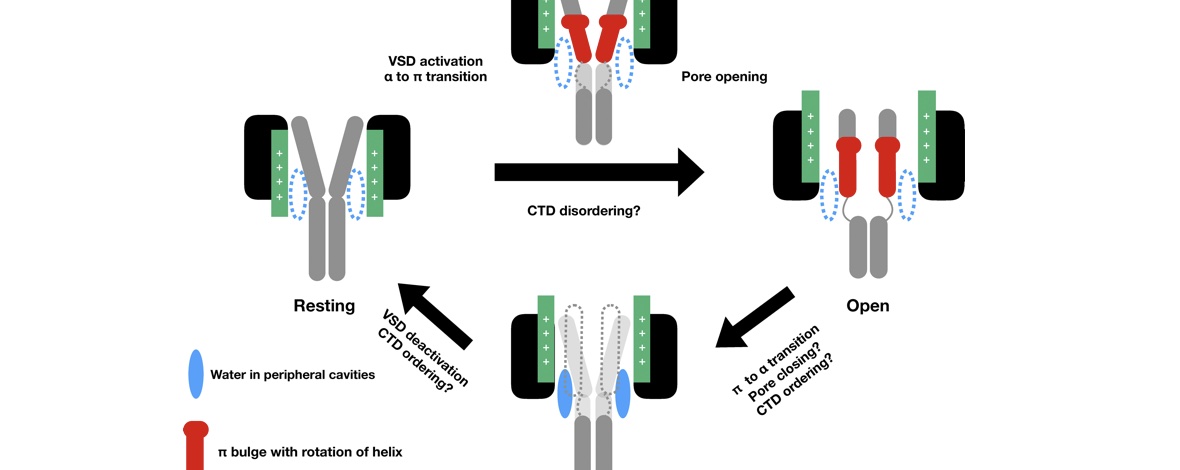
Voltage-gated sodium channels play an important role in electrical signaling in excitable cells. In response to changes in membrane potential, they cycle between nonconducting and conducting conformations. With recent advances in structural biology, structures of sodium channels have been captured in several distinct conformations, which are thought to represent different functional states. However, it has been difficult to capture the intrinsically transient open state. We recently showed that a proposed open state of the bacterial sodium channel NavMs was not conductive and that a conformational change involving a transition to a π-helix in the pore-lining S6 helix converted this structure into a conducting state. However, the relevance of this structural feature in other sodium channels, and its implications for the broader gating cycle, remained unclear. Here, we propose a comparable open state of another class of bacterial channel from Aliarcobacter butzleri (NavAb) with characteristic pore hydration, ion permeation, and drug binding properties. Furthermore, we show that a π-helix transition can lead to pore opening and that such a conformational change blocks fenestrations in the inner helix bundle. We also discover that a region in the C-terminal domain can undergo a disordering transition proposed to be important for pore opening. These results support a role for a π-helix transition in the opening of NavAb, enabling new proposals for the structural annotation and drug modulation mechanisms in this important sodium channel model.

Read the full publication here.