News

Publications

Gating for Cognition

Published 15 June in Nature Communications (doi 10.1038/s41467-026-74279-3):

Structural basis for activation and potentiation in a human α5β3 GABA(A) receptor

John CowgillChen Fan, Jan Steyaert, Rebecca J Howard,° Erik Lindahl°

Anesthetics and anticonvulsants act, in part, through diverse populations of type-A ɣ-aminobutyric acid receptors (GABAARs) formed from a pool of 19 subunits. In the hippocampus, α5 subunits primarily coassemble with β3 and, in some cases, γ2, generating numerous subtypes with differential functional and pharmacological properties critical in learning and memory. The stoichiometry, structure, and gating of these subpopulations are poorly understood. Here we show using cryogenic electron microscopy and electrophysiology that the human α5β3 GABAAR predominantly assembles with 2α:3β stoichiometry, though a minority population of 1α:4β indicates multiple assemblies are possible. In a resting-like state, a conserved activation gate and Zn2+-coordination at histidines on β3 block ion conduction. Upon GABA binding, global rearrangements release Zn2+ and open the activation gate in nearly all receptors. The activated receptor is unaffected upon binding the anesthetic etomidate or anticonvulsant topiramate, supporting a conformational selection mechanism of action. This work thus reveals the assembly, activation, and modulation of a GABAAR subtype critical to cognition, providing templates for structure-based drug discovery.

°Co-corresponding authors

Read the full publication here.

Publications

Sex Steroids in Suckers

Published 2 April 2026 in Science (doi 10.1126/science.aec9652):

A sensory system for mating in octopus

Pablo S Villar,* Hao Jiang,* Tatiana Shugaeva, Emma L Berdan, Arpita Kulkarni, Makoto Hiroi, Giovanni Masucci, Sam Reiter, Erik Lindahl, Rebecca J Howard, Ryan E Hibbs, Nicholas W Bellono

Sensory systems for mate recognition maintain species boundaries and influence diversification. Thus, uncovering how molecules and receptors evolve to mediate this critical function is essential to understanding biodiversity. Male octopuses use a specialized arm called the hectocotylus to identify females and navigate their internal organs to reach the oviduct and deliver sperm. Here, we discovered that the hectocotylus is a dual sensory and mating organ that uses contact-dependent chemosensation of progesterone, a conserved ovarian hormone. We identified chemotactile receptors for progesterone and resolved the structural basis for their evolution from ancestral neurotransmitter receptors and subsequent expansion and tuning across cephalopods. These findings reveal principles by which sensory innovations shape reproductive behavior and suggest mechanisms for how sensory evolution contributes to the diversification of life.

*Equal contributions

Read the full publication here.

Publications

Calcium Lockdown

Published 12 November 2025 in Journal of Structural Biology X (doi 10.1016/j.yjsbx.2025.100139):

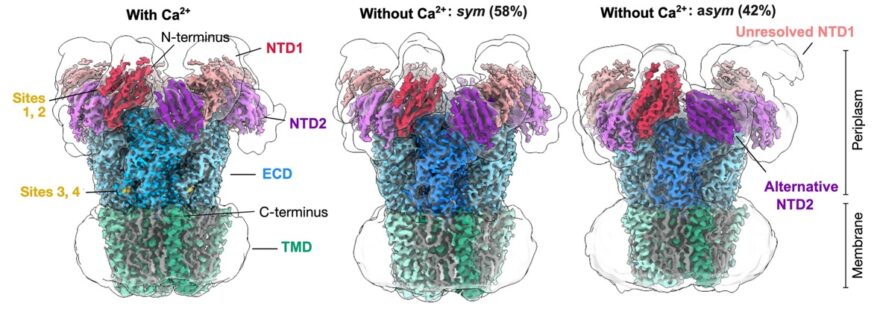
Calcium stabilizes the flexible N-terminal domain of the bacterial ion channel DeCLIC

Chen Fan,° Marie LycksellYuxuan ZhuangRebecca J Howard,° Erik Lindahl°

Pentameric ligand-gated ion channels (pLGICs) are responsible for the rapid conversion of chemical to electrical signals. In addition to the canonical extracellular and transmembrane domains, some prokaryotic pLGICs contain an N-terminal domain (NTD) of unclear structure and function. In one such case, the calcium-sensitive channel DeCLIC, the NTD appears to accelerate gating; however, its evident flexibility has posed a challenge to model building, and its role in calcium sensitivity is unclear. Here we report cryo-EM structures of DeCLIC in circularized lipid nanodiscs, achieving the highest resolution reported so far, and enabling definition of calcium-binding sites in both the N-terminal and canonical extracellular domains. In addition to the symmetric state, calcium depletion promoted an asymmetric conformation of the NTD, offering a structural rationale for small-angle scattering results. Behavior of these structures in molecular dynamics simulations demonstrated calcium stabilization of the NTD. These features of DeCLIC offer a model system for ion-channel modulation by a flexible accessory domain, potentially conserved in structurally homologous systems across evolution.

°Co-corresponding authors

Read the full publication here.
Publications

Discovering New States with AF2 + MD

Published 30 October 2025 in Communications Chemistry (doi 10.1038/s42004-025-01751-4):

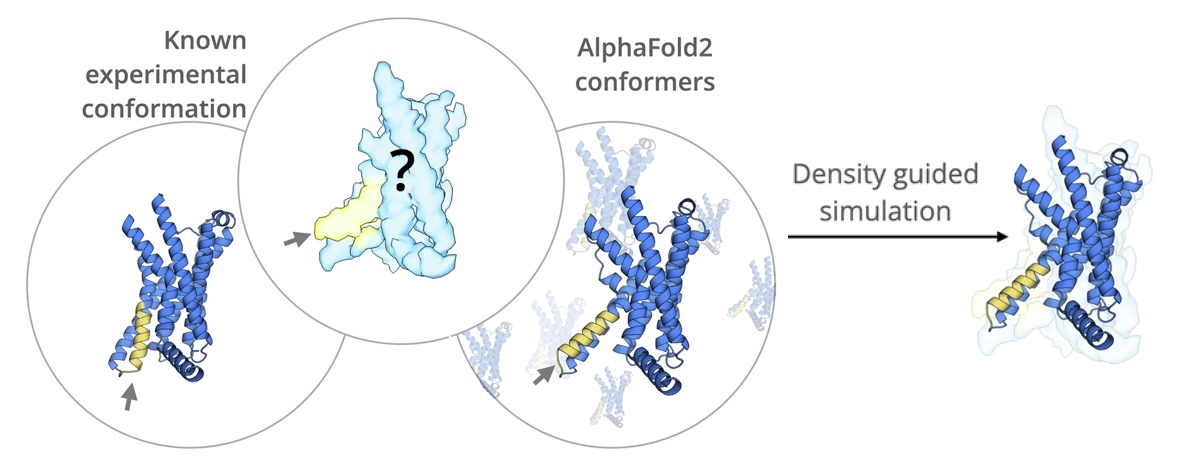
Modeling cryo-EM structures in alternative states with AlphaFold2-based models and density-guided simulations

Tatiana Shugaeva, Rebecca J Howard, Nandan HaloiErik Lindahl°

Modeling atomic coordinates into a target cryo-electron microscopy map is a crucial step in structure determination. Despite recent advances, proteins with multiple functional states remain a challenge – particularly when suitable molecular templates are unavailable for certain states, and the map resolution is not high enough to build de novo models. This is a common scenario, for example, among pharmacologically relevant membrane-bound receptors and transporters. Here, we introduce a refinement approach in which (i) several initial models are generated by stochastic subsampling of the multiple sequence alignment (MSA) space in AlphaFold2, (ii) the resulting models are subjected to structure-based k-means clustering, iii) density-guided molecular dynamics simulations are performed from the cluster representatives, and (iv) a final model is selected on the basis of both map fit and model quality. This results in improved fitting accuracy compared to single starting point scenarios for three membrane proteins (the calcitonin receptor-like receptor, L-type amino acid transporter and alanine-serine-cysteine transporter) which undergo substantial conformational transitions between functional states. Our results indicate that ensemble construction using generative AI combined with simulation-based refinement facilitates building of alternative states in several families of membrane proteins.

°Co-corresponding authors

Read the full publication here.
Publications

Fitting Ligands with AF3

Published 11 August 2025 in PLoS Computational Biology (doi 10.1371/journal.pcbi.1013367):

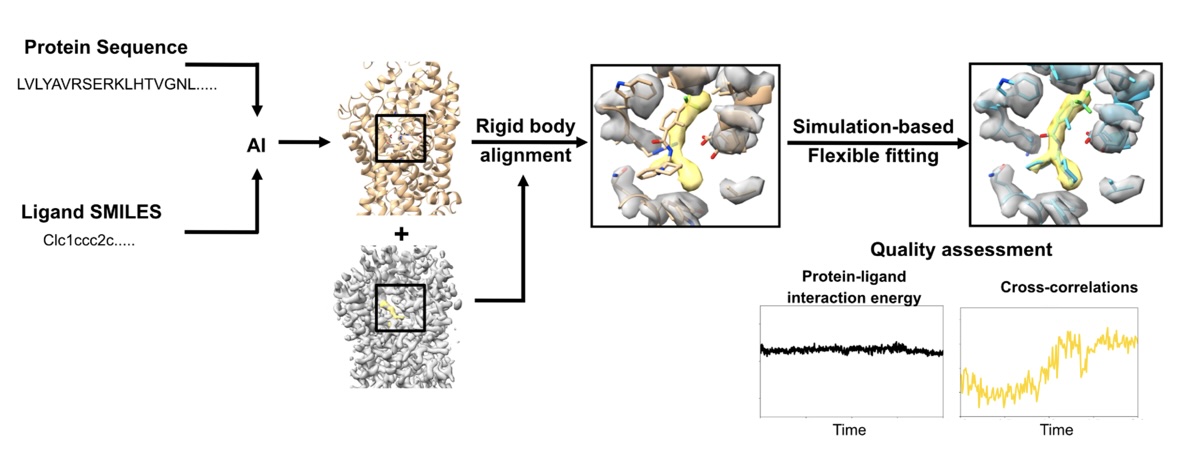
Cryo-EM ligand building using AlphaFold3-like model and molecular dynamics

Nandan Haloi, Rebecca J Howard, Erik Lindahl

Resolving protein-ligand interactions in atomic detail is key to understanding how small molecules regulate macromolecular function. Although recent breakthroughs in cryogenic electron microscopy (cryo-EM) have enabled high-quality reconstruction of numerous complex biomolecules, the resolution of bound ligands is often relatively poor. Furthermore, methods for building and refining molecular models into cryo-EM maps have largely focused on proteins and may not be optimized for the diverse properties of small-molecule ligands. Here, we present an approach that integrates artificial intelligence (AI) with cryo-EM density-guided simulations to fit ligands into experimental maps. Using three inputs: 1) a protein amino acid sequence, 2) a ligand specification, and 3) an experimental cryo-EM map, we validated our approach on a set of biomedically relevant protein-ligand complexes including kinases, GPCRs, and solute transporters, none of which were present in the AI training data. In cases for which AI was not sufficient to predict experimental poses outright, integration of flexible fitting into molecular dynamics simulations improved ligand model-to-map cross-correlation relative to the deposited structure from 40-71% to 82-95%. This work offers a straightforward pipeline for integrating AI and density-guided simulations to model building in cryo-EM maps of ligand-protein complexes.

Read the full publication here.

Publications

Drugging rho1

Published 1 August 2025 in Nature Communications (doi 10.1038/s41467-025-61932-6):

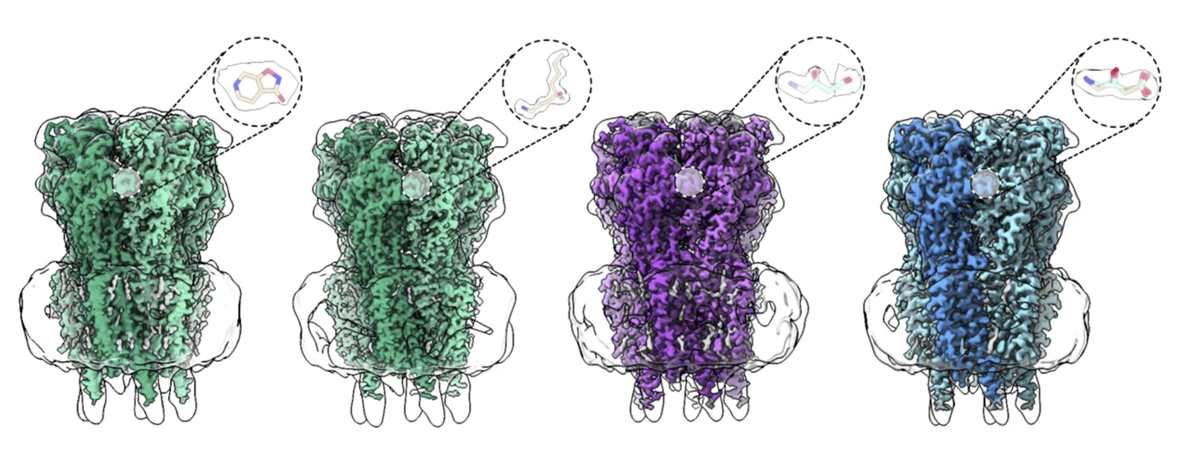
Cryo-EM structures of ρ1 GABAA receptors with antagonist and agonist drugs

Chen FanJohn Cowgill, Rebecca J HowardErik Lindahl°

The family of ρ-type GABAA receptors includes potential therapeutic targets in several neurological conditions, and features distinctive pharmacology compared to other subtypes. Here we report four cryo-EM structures with previously unresolved ligands, electrophysiology recordings, and molecular dynamics simulations to characterize binding and conformational impact of the drugs THIP (a non-opioid analgesic), CGP36742 (a phosphinic acid) and GABOB (an anticonvulsant) on a human ρ1 GABAA receptor. A distinctive binding pose of THIP in ρ1 versus α4β3δ GABAA receptors offers a rationale for its inverse effects on these subtypes. CGP36742 binding is similar to the canonical ρ-type inhibitor TPMPA, supporting a shared mechanism of action among phosphinic acids. Binding of GABOB is similar to GABA, but produces a mixture of partially-locked and desensitized states, likely underlying weaker agonist activity. Together, these results elucidate interactions of a ρ-type GABAA receptor with therapeutic drugs, offering mechanistic insights and a basis for further pharmaceutical development.

°Co-corresponding authors

Read the full publication here.
Publications

Backbone Lock in GABA(A)

Published 3 July 2025 in Nature Communications (doi 10.1038/s41467-025-61447-0):

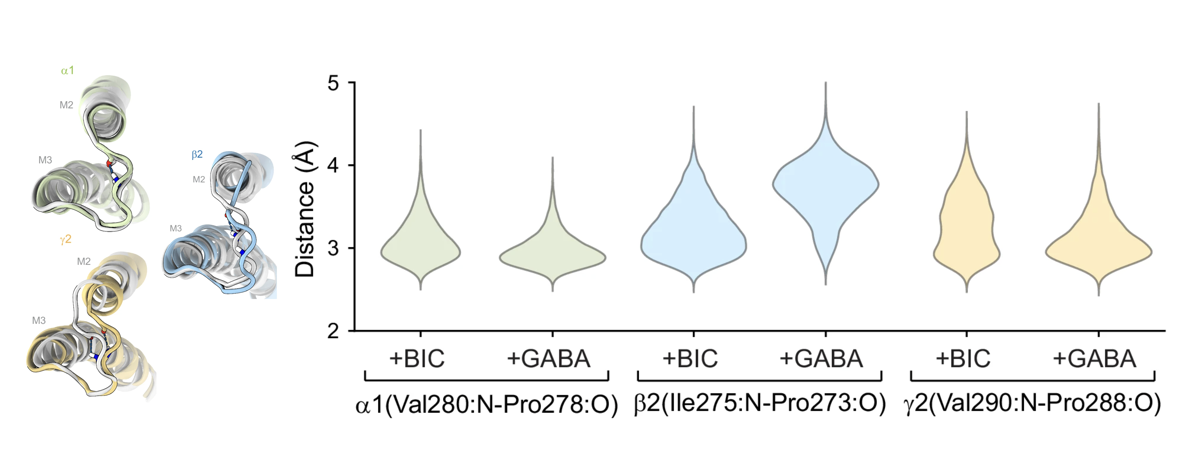
A single main-chain hydrogen bond required to keep GABAA receptors closed

Cecilia M Borghese, Jason D Galpin, Samuel Eriksson Lidbrink, Yuxuan Zhuang, Netrang G Desai, Rebecca J Howard, Erik Lindahl, Christopher A Ahern, Marcel P Goldschen-Ohm

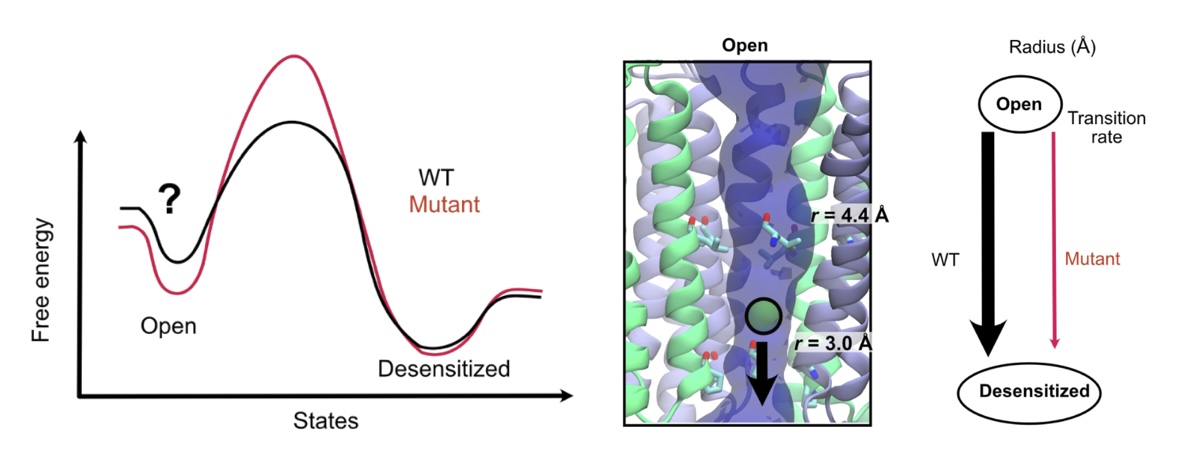
GABAA receptors (GABAARs) are the primary inhibitory neurotransmitter receptors throughout the central nervous system. Genetic mutations causing their dysfunction are related to a broad spectrum of human disorders such as epilepsy, neurodevelopment and intellectual disability, autism spectrum disorder, schizophrenia, and depression. GABAARs are also important drug targets for anxiolytics, anticonvulsants, antidepressants, and anesthetics. Despite significant progress in understanding their three-dimensional structure, a critical gap remains in determining the molecular basis for channel gating. We recently identified mutations in the M2-M3 linkers that suggest linker flexibility has asymmetric subunit-specific correlations with channel opening. Here we use non-canonical amino acids (ncAAs) to investigate the role of main-chain H-hydrogen bonds (H-bonds) that may stabilize the M2-M3 linkers. We show that a single main-chain H-bond within the β2 subunit M2-M3 linker inhibits pore opening and is required to keep the unliganded channel closed. Furthermore, breaking this H-bond accounts for approximately one third of the energy used to open the channel during activation by GABA. In contrast, the analogous H-bond in the α1 subunit has no effect on gating. Our molecular simulations support the idea that channel opening involves the state-dependent breakage/disruption of a specific main-chain H-bond within the β2 subunit M2-M3 linker.

Read the full publication here.

Publications

Building Ensembles with SAS and AF2

Published 27 June 2025 in PLoS Computational Biology (doi 10.1371/journal.pcbi.1013187):

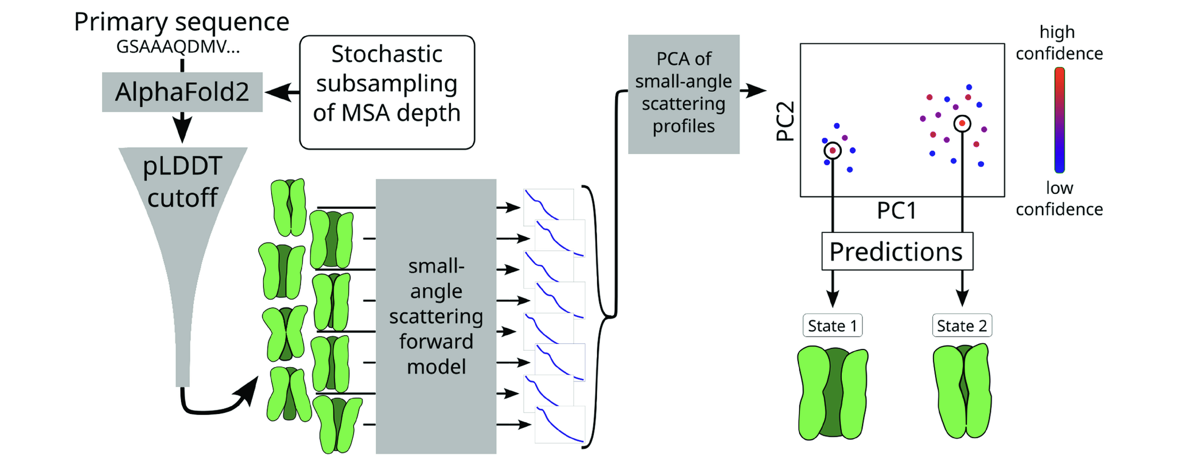
Resolving the conformational ensemble of a membrane protein by integrating small-angle scattering with AlphaFold

Samuel Eriksson Lidbrink, Rebecca J Howard, Nandan HaloiErik Lindahl°

The function of a protein is enabled by its conformational landscape. For non-rigid proteins, a complete characterization of this landscape requires understanding the protein’s structure in all functional states, the stability of these states under target conditions, and the transition pathways between them. Several strategies have recently been developed to drive the machine learning algorithm AlphaFold2 (AF) to sample multiple conformations, but it is more challenging to a priori predict what states are stabilized in particular conditions and how the transition occurs. Here, we combine AF sampling with small-angle scattering curves to obtain a weighted conformational ensemble of functional states under target environmental conditions. We apply this to the pentameric ion channel GLIC using small-angle neutron scattering (SANS) curves, and identify apparent closed and open states. By comparing experimental SANS data under resting and activating conditions, we can quantify the subpopulation of closed channels that open upon activation, matching both experiments and extensive simulation sampling using Markov state models. The predicted closed and open states closely resemble crystal structures determined under resting and activating conditions respectively, and project to predicted basins in free energy landscapes calculated from the Markov state models. Further, without using any structural information, the AF sampling also correctly captures intermediate conformations and projects onto the transition pathway resolved in the extensive sampling. This combination of machine learning algorithms and low-dimensional experimental data appears to provide an efficient way to predict not only stable conformations but also accurately sample the transition pathways several orders of magnitude faster than simulation-based sampling.

°Co-corresponding authors

Read the full publication here.
Publications

Engineering Lipid Binding

Version of Record 30 April 2025 in eLife (doi 10.7554/eLife.104237.3):

Engineering cardiolipin binding to an artificial membrane protein reveals determinants for lipid-mediated stabilization

Mia L Abramsson, Robin A Corey,° Jan L Skerle, Louise J Persson, Olivia Andén, Abraham O Oluwole, Rebecca J Howard, Erik Lindahl, Carol V Robinson, Kvido Strisovsky, Erik G Marklund, David Drew, Phillip J Stansfeld,° Michael Landreh°

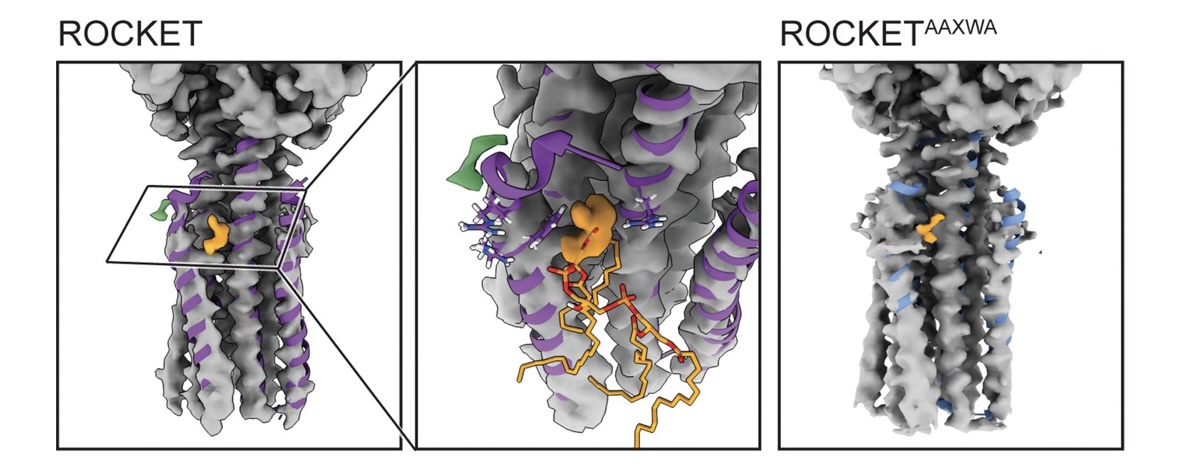
Integral membrane proteins carry out essential functions in the cell, and their activities are often modulated by specific protein-lipid interactions in the membrane. Here, we elucidate the intricate role of cardiolipin (CDL), a regulatory lipid, as a stabilizer of membrane proteins and their complexes. Using the in silico-designed model protein TMHC4_R (ROCKET) as a scaffold, we employ a combination of molecular dynamics simulations and native mass spectrometry to explore the protein features that facilitate preferential lipid interactions and mediate stabilization. We find that the spatial arrangement of positively charged residues as well as local conformational flexibility are factors that distinguish stabilizing from non-stabilizing CDL interactions. However, we also find that even in this controlled, artificial system, a clear-cut distinction between binding and stabilization is difficult to attain, revealing that overlapping lipid contacts can partially compensate for the effects of binding site mutations. Extending our insights to naturally occurring proteins, we identify a stabilizing CDL site within the E. coli rhomboid intramembrane protease GlpG and uncover its regulatory influence on enzyme substrate preference. In this work, we establish a framework for engineering functional lipid interactions, paving the way for the design of proteins with membrane-specific properties or functions.

°Co-corresponding authors

Read the full publication here.
Publications

Stimulants in a Cryptic Serotonin Pocket

Published 11 April 2025 in Science Advances (doi 10.1126/sciadv.adr0797):

Discovering cryptic pocket opening and binding of a stimulant derivative in a vestibular site of the 5-HT3A receptor

Nandan Haloi, Emelia Karlsson, Mark Delarue, Rebecca J Howard,° Erik Lindahl°

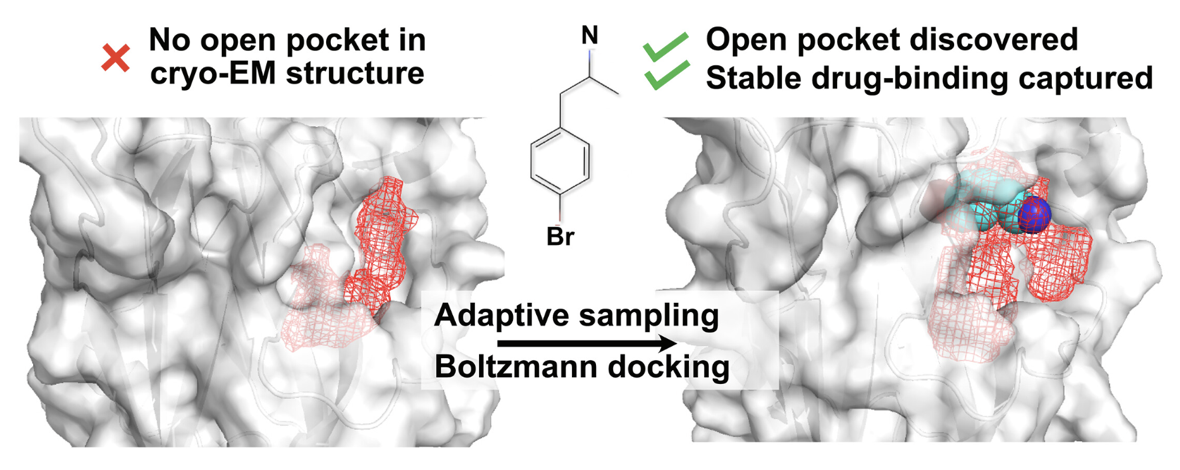
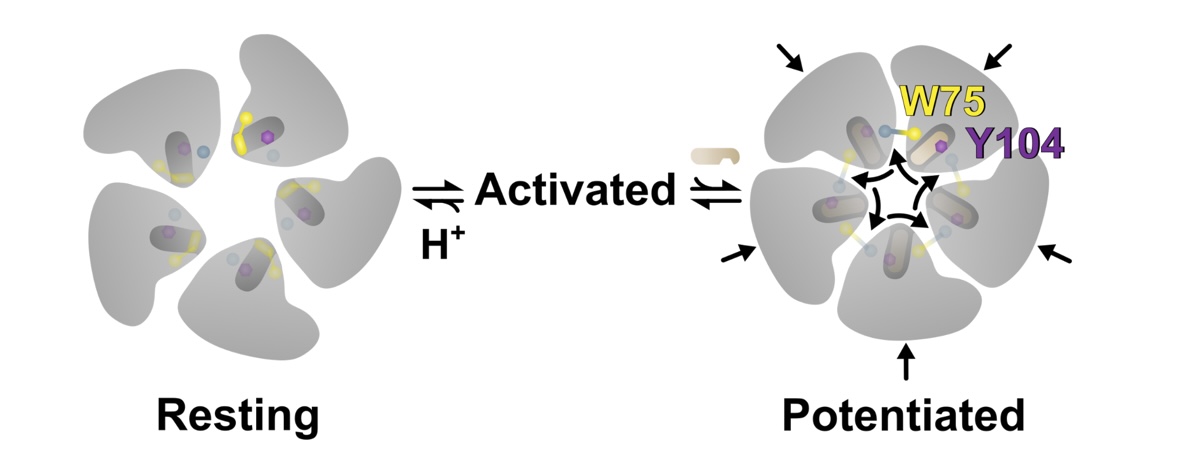
A diverse set of modulators, including stimulants and anesthetics, regulates ion channel function in our nervous system. However, structures of ligand-bound complexes can be difficult to capture by experimental methods, particularly when binding is dynamic. Here, we used computational methods and electrophysiology to identify a possible bound state of a modulatory stimulant derivative in a cryptic vestibular pocket of a mammalian serotonin-3 receptor. We first applied a molecular dynamics simulation–based goal-oriented adaptive sampling method to identify possible open-pocket conformations, followed by Boltzmann docking that combines traditional docking with Markov state modeling. Clustering and analysis of stability and accessibility of docked poses supported a preferred binding site; we further validated this site by mutagenesis and electrophysiology, suggesting a mechanism of potentiation by stabilizing intersubunit contacts. Given the pharmaceutical relevance of serotonin-3 receptors in emesis, psychiatric, and gastrointestinal diseases, characterizing relatively unexplored modulatory sites such as these could open valuable avenues to understanding conformational cycling and designing state-dependent drugs.

°Co-corresponding authors

Read the full publication here.