
Twenty-six members of Molecular Biophysics Stockholm, representing eleven countries, celebrated the launch of a new academic year with a Swedish kräftskiva, 4 September 2018, at the Science for Life Laboratory in Solna, Sweden.
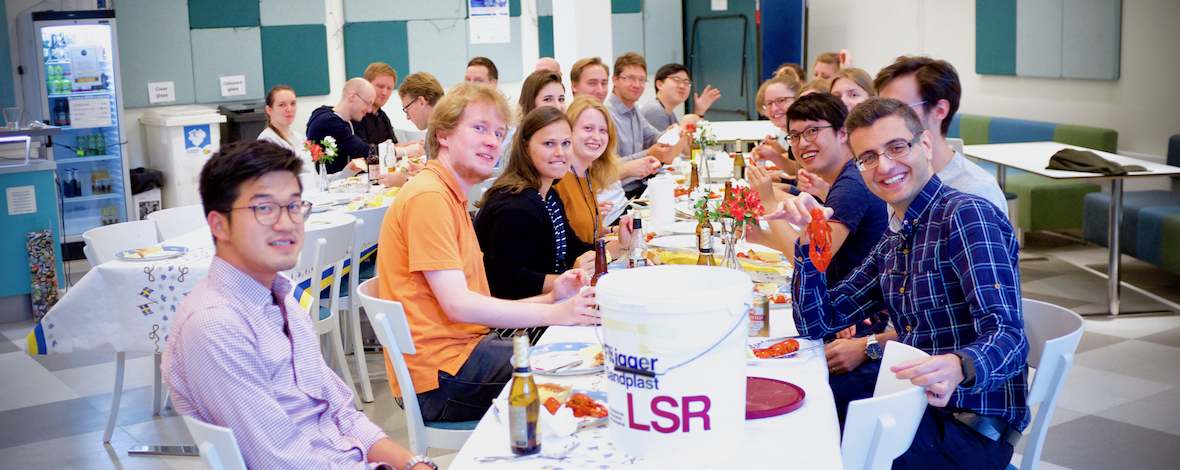
Twenty-six members of Molecular Biophysics Stockholm, representing eleven countries, celebrated the launch of a new academic year with a Swedish kräftskiva, 4 September 2018, at the Science for Life Laboratory in Solna, Sweden.

Fika is Swedish for a coffee break that’s more about socializing than drinking coffee. Fika is an important part of everyday life and something sweet is always welcome.

Summers in Stockholm can be glorious with up to 21h of light. So get you sun in before winter hits and the capital sees a mere six hours of sunlight on the shortest day.

Stockholm has an excellent public transportation network of trains, subways, trams, buses, and even boats. Stockholm’s subway system is said to be the world’s longest art exhibit as almost all of its stations are decorated by artists.

Every year in December, the Nobel Prize award ceremony takes place at Stockholm’s City Hall. You get a chance of meeting the Laureates at events organized during the Novel week.

Stockholm is built on 14 islands connected by 57 bridges creating a city surrounded by water so clean that you can go swimming or fishing even in the very heart of the city.
Almost everyone in Stockholm speaks English and is happy to do so with foreigners. You are not expected to learn the language but if you want to, the city offers free Swedish courses.
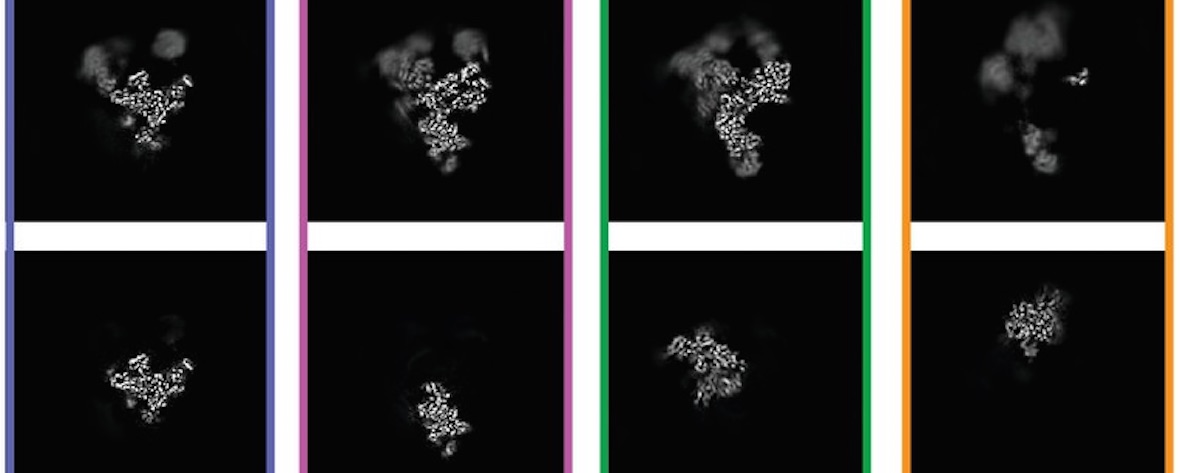
From the June 1, 2018 release of eLife (v. 7 art. e36861):
Takanori Nakane, Dari Kimanius, Erik Lindahl & Sjors HW Scheres
Macromolecular complexes that exhibit continuous forms of structural flexibility pose a challenge for many existing tools in cryo-EM single-particle analysis. We describe a new tool, called multi-body refinement, which models flexible complexes as a user-defined number of rigid bodies that move independently from each other. Using separate focused refinements with iteratively improved partial signal subtraction, the new tool generates improved reconstructions for each of the defined bodies in a fully automated manner. Moreover, using principal component analysis on the relative orientations of the bodies over all particle images in the data set, we generate movies that describe the most important motions in the data. Our results on two test cases, a cytoplasmic ribosome from Plasmodium falciparum, and the spliceosomal B-complex from yeast, illustrate how multi-body refinement can be useful to gain unique insights into the structure and dynamics of large and flexible macromolecular complexes.
Read the full publication here.
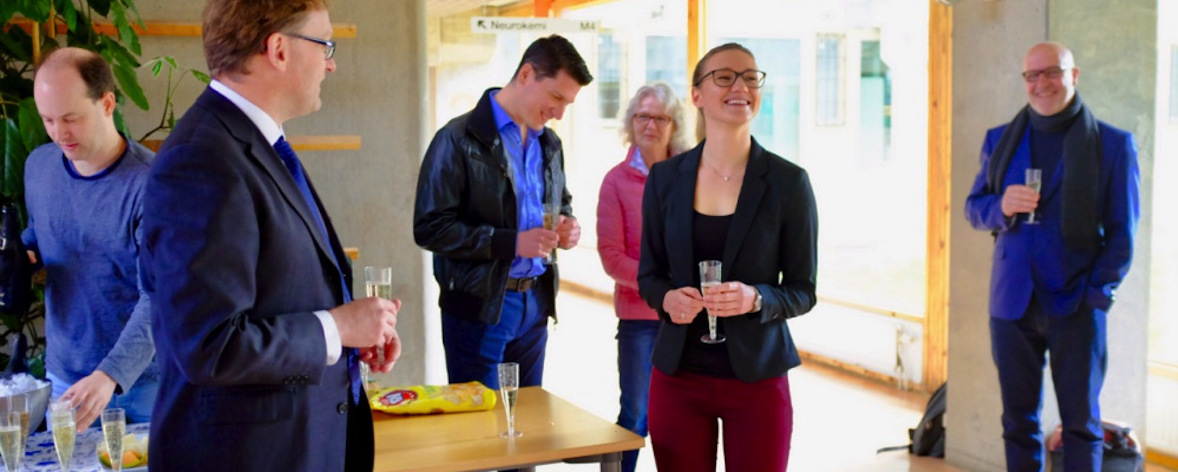
Members of Molecular Biophysics Stockholm joined family and friends in celebrating Stephanie Heusser’s successful defense of her PhD thesis in Biochemistry & Biophysics from Stockholm University, Allosteric Modulation of Pentameric Ligand-Gated Ion Channels by General Anesthetics, 4 May 2018 in Magnélisalen, Stockholm University. Professor Pierre-Jean Corringer (Pasteur Institute, Paris, France) served as opponent, and Professor Erik Lindahl (Stockholm University, KTH Royal Institute of Technology) led a toast to his advisee of four years.
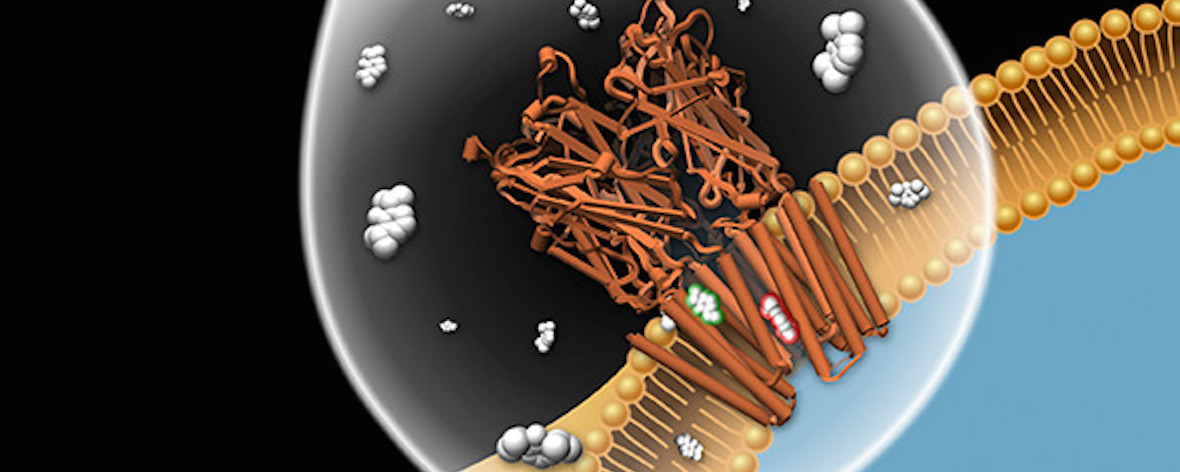
Featured on the April 24, 2018 cover of Cell Reports (v. 23 pp. 993–1004):
Zaineb Fourati*, Rebecca J Howard*, Stephanie A Heusser, Haidai Hu, Reinis R Ruza, Ludovic Sauguet, Erik Lindahl** & Marc Delarue**
*Equal contributions; **senior authors
Ion channel modulation by general anesthetics is a vital pharmacological process with implications for receptor biophysics and drug development. Functional studies have implicated conserved sites of both potentiation and inhibition in pentameric ligand-gated ion channels, but a detailed structural mechanism for these bimodal effects is lacking. The prokaryotic model protein GLIC recapitulates anesthetic modulation of human ion channels, and it is accessible to structure determination in both apparent open and closed states. Here, we report ten X-ray structures and electrophysiological characterization of GLIC variants in the presence and absence of general anesthetics, including the surgical agent propofol. We show that general anesthetics can allosterically favor closed channels by binding in the pore or favor open channels via various subsites in the transmembrane domain. Our results support an integrated, multi-site mechanism for allosteric modulation, and they provide atomic details of both potentiation and inhibition by one of the most common general anesthetics.
Read the full publication here.