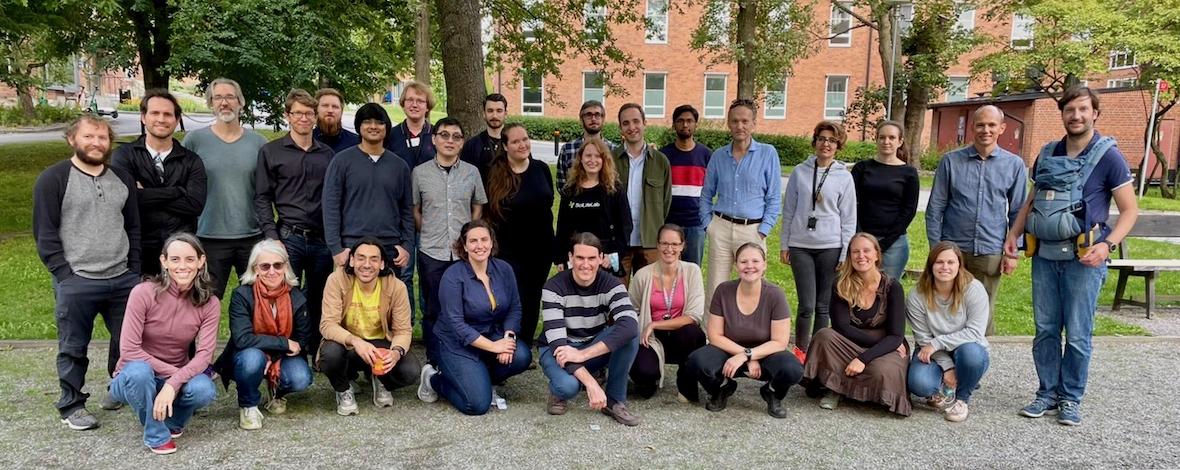
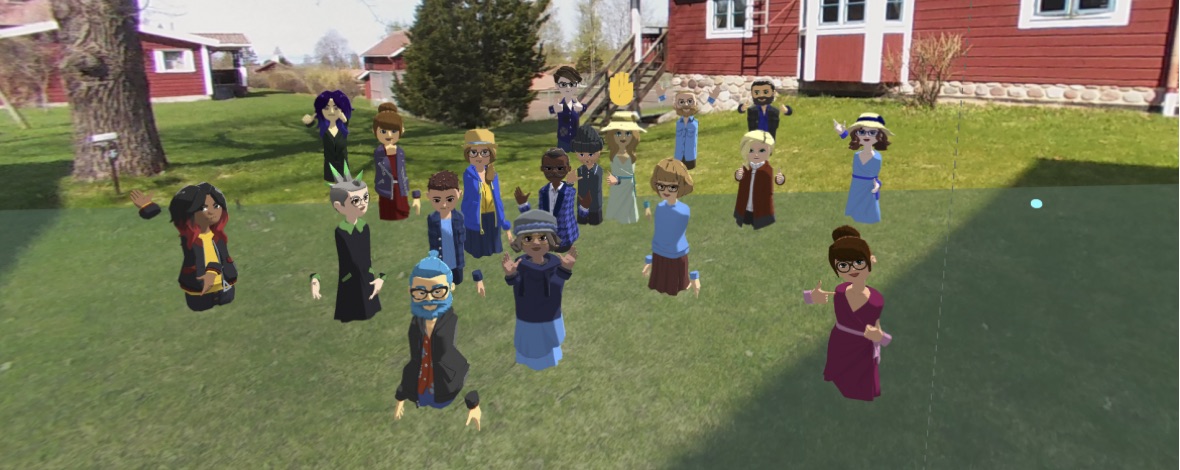
Thirty members of Molecular Biophysics Stockholm finally gathered 25–26 August at Skepparholmen Nacka, our first such off-site group program since 2019. The program included workshops on interdisciplinary communication, popular science, course development, and networking skills, as well as bonding over wonderful meals, pools, and saunas. Big thanks to Alessandra, Anton, Michele, and Reba for co-organizing this long-awaited retreat.
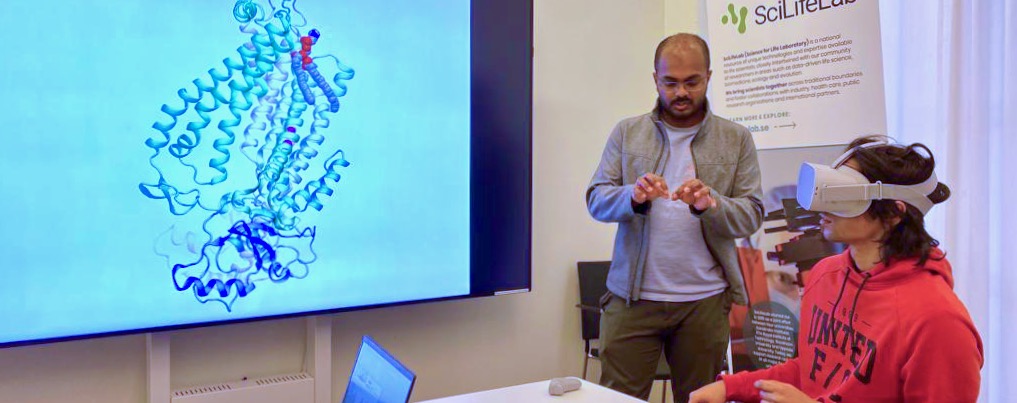
Members of Molecular Biophysics Stockholm joined SciLifeLab colleagues in hosting local high school students for an introduction to life sciences research on 11 March—the first such event possible since the onset of the COVID-19 global pandemic. Among others, Nandan Haloi, Marie Lycksell, and Will Pipatpolkai introduced visiting students to principles of molecular dynamics simulations, including a virtual-reality tour of membrane proteins in motion.
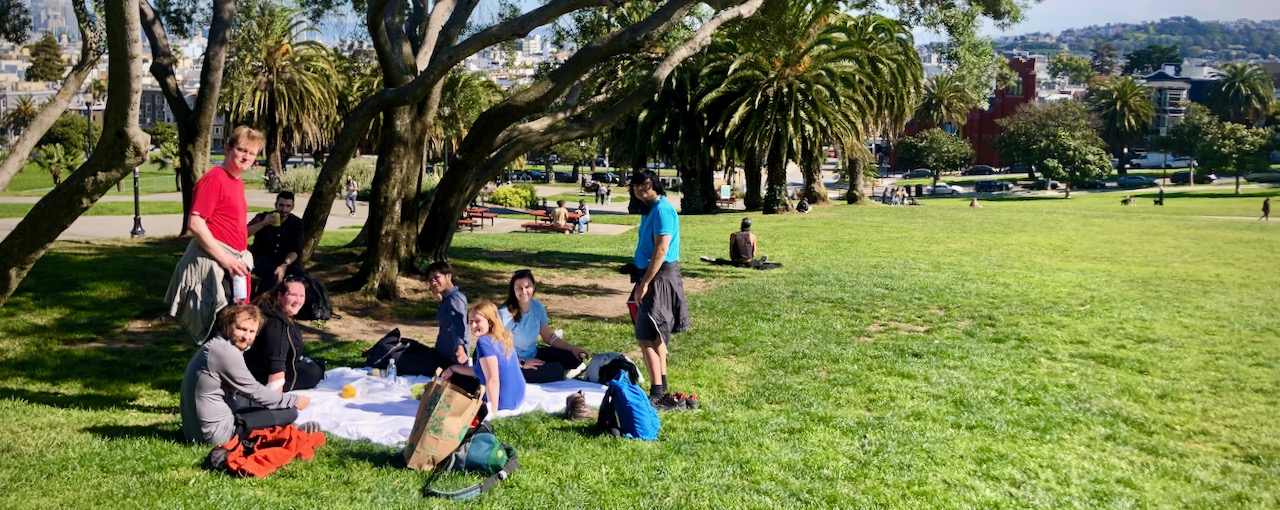
Twelve members of Molecular Biophysics Stockholm traveled to San Francisco, CA to present their research at the 66th Annual Meeting of the Biophysical Society, back on-site after a remote meeting in 2021. Among others, Lucie Delemotte spoke in and chaired the Symposium on Peripheral Membrane Proteins, Anton Jansen spoke in the Platform on Molecular Dynamics (II), and Erik Lindahl spoke in and co-chaired the Platform on Computational Methods and Bioinformatics (I). Cathrine Bergh was an invited speaker in the Platform on Protein-Lipid Interactions, with her talk delivered by Urška Rovšnik due to COVID-19 infection; Koushik Choudhury and Yuxuan Zhuang were invited speakers in the Platforms on Voltage-Gated Channels (I) and Ligand-Gated Ion Channels (II), though both talks were delivered by Reba Howard due to travel limitations.
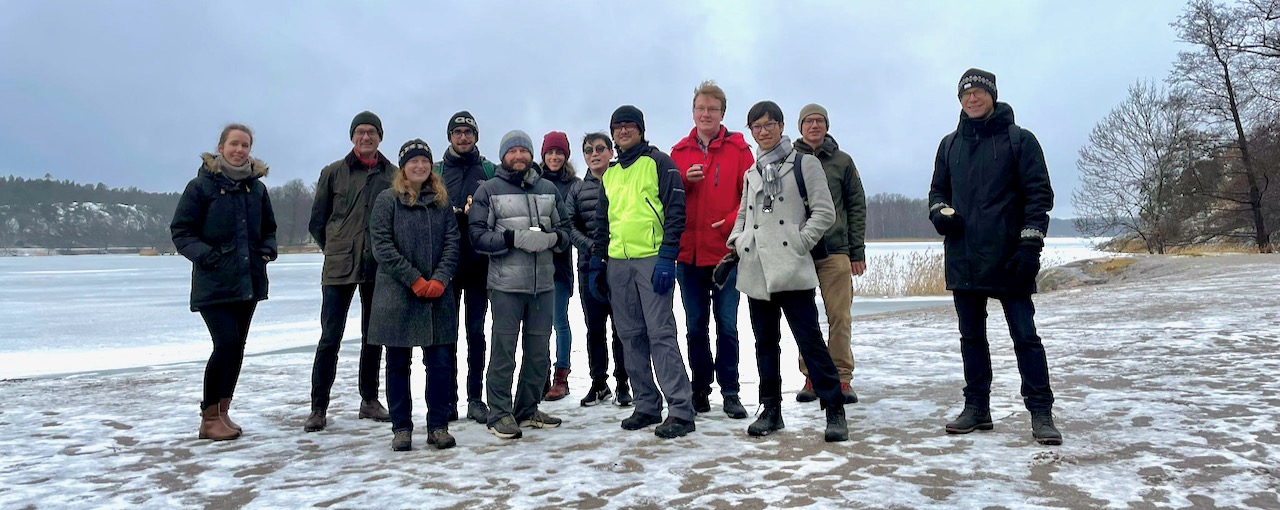
Members of Molecular Biophysics Stockholm braved the winter weather on 8 February for an afternoon hike around Brunnsviken, a couple kilometers east of our SciLifeLab campus. Though we look forward to being able to socialize indoors, we are privileged to work so close to such beautiful and accessible spots.
Twenty-nine members of Molecular Biophysics Stockholm, along with colleagues in the Cryo-EM Swedish Infrastructure Unit, finally gathered for an outdoor mini-retreat on 23 August 2021 on the Karolinska Institute campus. Although plans for a longer off-site event were again postponed by the ongoing COVID-19 pandemic, it was a tremendous opportunity to reconnect in person with our collegial community, including several members joined within recent months. Many thanks to co-organizers Alessandra, Michele, Anton, Reba, and especially Linnea for the afternoon activities.
Members of Molecular Biophysics Stockholm joined colleagues in our local structural-biology community, as well as invited speakers from France, Germany, Canada, Australia, and the USA, for the 24th annual Swedish Conference on Macromolecular Structure and Function (SWEPROT) 20–23 June 2021. In contrast to previous gatherings — with the exception of 2020, which was cancelled due to COVID-19 precautions — this year’s program was relocated from its foundational Tällberg venue in central Sweden, to be hosted instead by Linköping University and Around the Corner as a Video and Virtual Reality Conference.
Congratulations especially to MBS doctoral student Marie Lycksell, who was selected among submitted abstracts to present a virtual talk on Solution structure of the pentameric ligand-gated ion channel GLIC probed by small-angle neutron scattering, and further awarded runner-up for Best Oral Presentation.
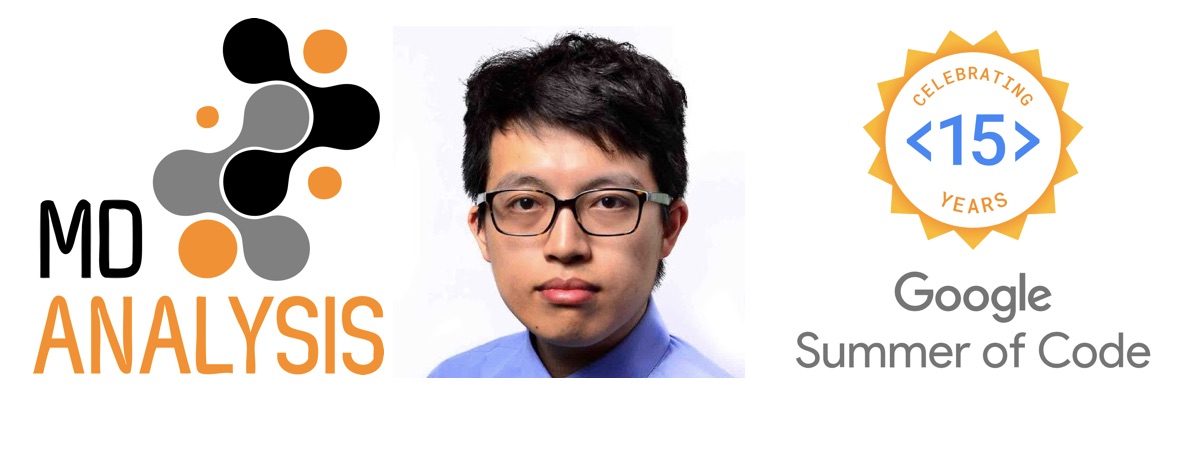
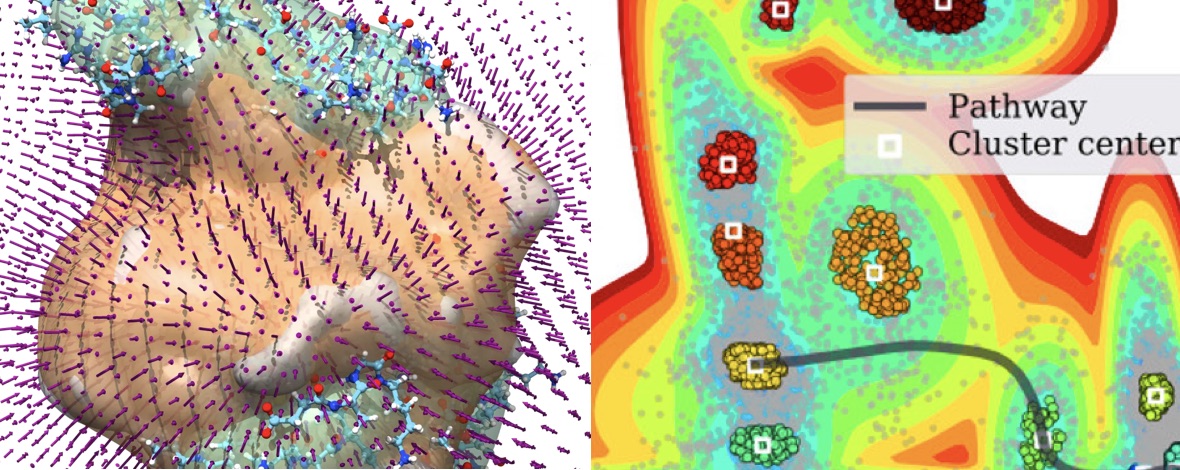
As we return to the (semi-) normal academic year, Molecular Biophysics Stockholm also celebrated PhD student Yuxuan Zhuang‘s successful completion of a competitive summer internship contributing to MDAnalysis, a freely available, open-source object-oriented Python library to analyze trajectories from molecular dynamics simulations.
Zhuang’s internship was awarded through the Google Summer of Code, focused on bringing more student developers into open source software development. Just past its 15th year, the global program has produced over 38 million lines of code for 715 open source organizations.
Read Zhuang’s final remarks on his summer project, Serialization of the MDAnalysis-Universe for Parallelism, here.
While many seminars in our science communities have been suspended this spring, EU-funded Centre of Excellence BioExcel has stepped up its promotion of educational webinars for computational biomolecular research.
In support of this effort, Molecular Biophysics Stockholm (MBS) members delivered two presentations in the spring series.
Conceived in 2016, BioExcel webinars cover broad topics related to the latest development of major software packages; their application to modeling and simulation; best practices for performance tuning and efficient usage on HPC and novel architectures; introductory tutorials for novel users; and much more. Prior to this spring, MBS members also contributed regularly to the series on optimizing molecular dynamics simulations in GROMACS.
Webinar slides and video recordings are freely available from BioExcel; for updates and registration on upcoming events, subscribe to the community newsletter.
Three remarkable members of Molecular Biophysics Stockholm celebrated completion of their doctoral degrees this spring.
Though their presentations had to be revised to meet public-health recommendations, including video-casting to off-site opponents and committee members, all three delivered polished, informative defenses of their respective theses to enthusiastic remote audiences.
Petter Johansson, Department of Applied Physics, KTH Royal Institute of Technology. Molecular processes in dynamic wetting, 16 April 2020. Opponent: Professor Guillaume Galliero, University of Pau and Pays de l’Adour, France.
Like so many of our colleagues worldwide, Molecular Biophysics Stockholm (MBS) has been engaged in various efforts to navigate and combat the novel coronavirus. Although the group’s past research rarely intersected with virology or clinical work, and none of us are are experts in the field, we hope to help where we can.
Summary by Erik Lindahl, 21-Apr 2020 on Exscalate4CoV and related projects
Members of the GROMACS team and BioExcel Centre also contribute to Exscalate4CoV, a consortium awarded €3 million by the European Commission for research on COVID-19 vaccines, treatment, and diagnostics. Key tasks at MBS include deployment of molecular-dynamics code and free-energy calculations for coronavirus protein simulations and drug-candidate scoring. For an overview of relevant targets, data repositories, and community collaborations, watch Lindahl’s presentation to the Centre Européen de Calcul Atomique et Moléculaire (English, 4:13–36:04).
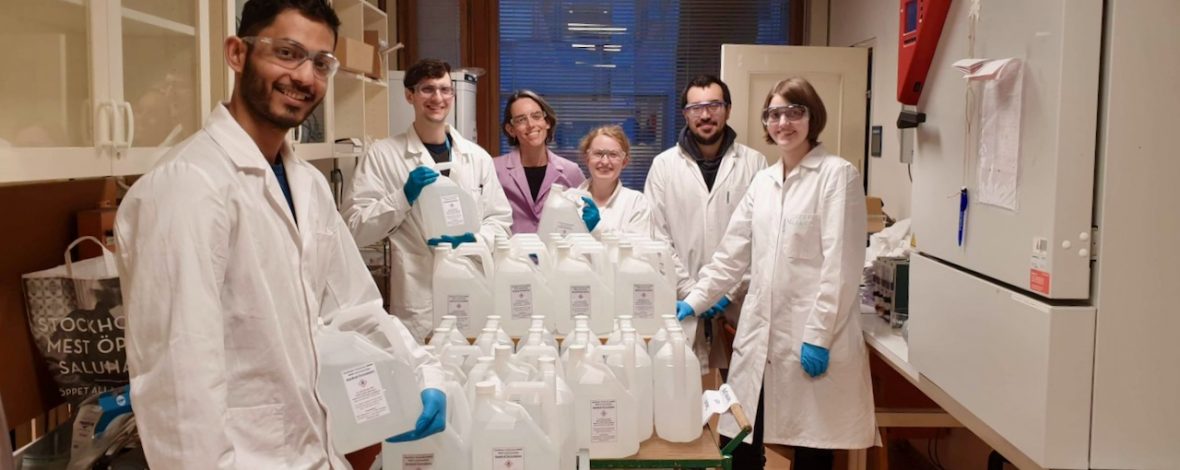
Marie Lycksell and other SU chemists involved in hand-sanitizer production
On the clinical side, members of the Ligand-Gated Ion Channels (LGICs) team have worked with fellow chemists at Stockholm University to alleviate urgent needs for medical supplies, helping coordinate donations of masks, gloves, and other personal protective equipment from SciLifeLab to local hospitals. With reagents contributed by academic groups, the Museum of Natural History, and companies including GE Health, Petrolia, Runa and Absolut Vodka, we also assisted in the department’s production and distribution of over 20,000 liters of hand sanitizer to medical and care facilities. Read more in recent coverage by the university (English) and national (Swedish) media.
Reba Howard producing enzymes for rapid COVID-19 tests
MBS is also involved in an accelerated grant by the KAW Foundation to iLACO-Sweden, a multi-institution project led by Professor Vicent Pelechano (Karolinska Institute) to develop a rapid, low-cost color-based test for COVID-19 infection. The method was recently covered on Sveriges Television, including an interview with LGICs team-lead Reba Howard (Swedish, some English audio).
We are deeply grateful for the dedication and compassion of all MBS members, who continue to find creative paths to productivity even at a distance. Many have managed unprecedented disruptions to academic, research, and development work, including DISstudents Jojo Scott and Phaedra Robinson, whose time abroad was truncated months early by US travel restrictions. We so look forward to collaborating again at higher density on the other side of this pandemic.