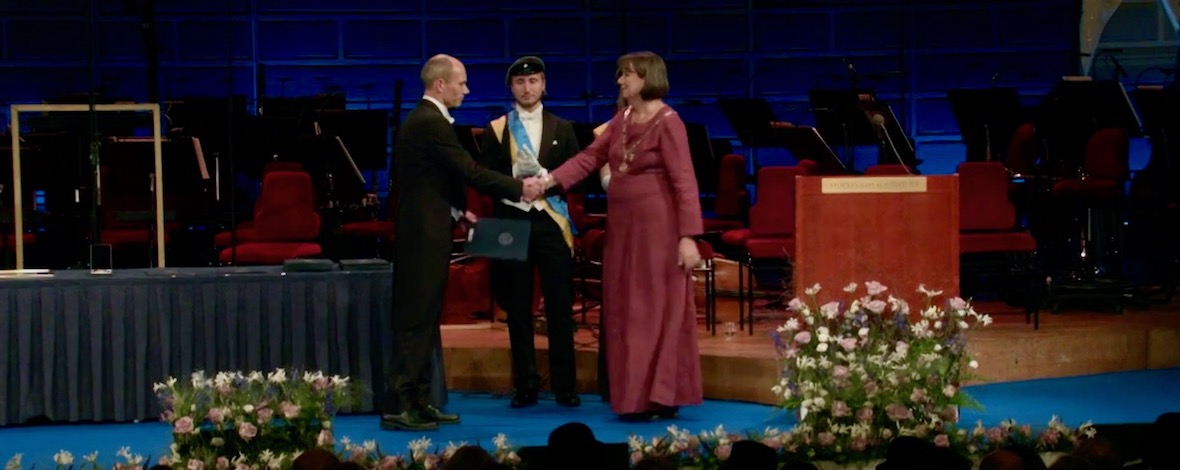
Members of Molecular Biophysics Stockholm celebrated Berk Hess‘ promotion to full Professor in Applied Physics at KTH Royal Institute of Technology, 15 November 2019, conferred by President Sigbritt Karlsson at Konserthuset in Stockholm, Sweden. With funding recently awarded by Vetenskapsrådet to the INTERFACE project, Hess’ team stands poised grow in size and contribution; check back soon for new openings!
Category: News
2019 Fall Retreat
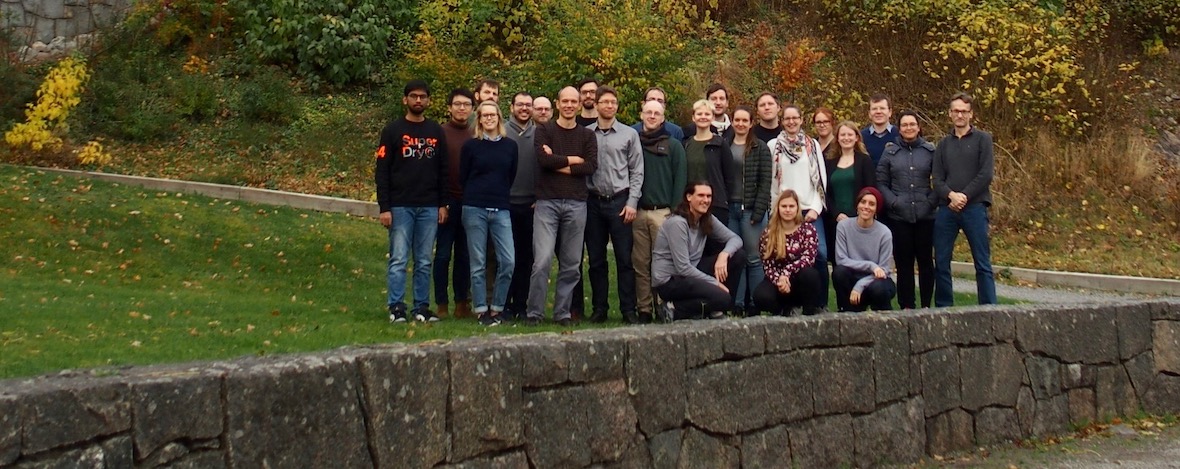
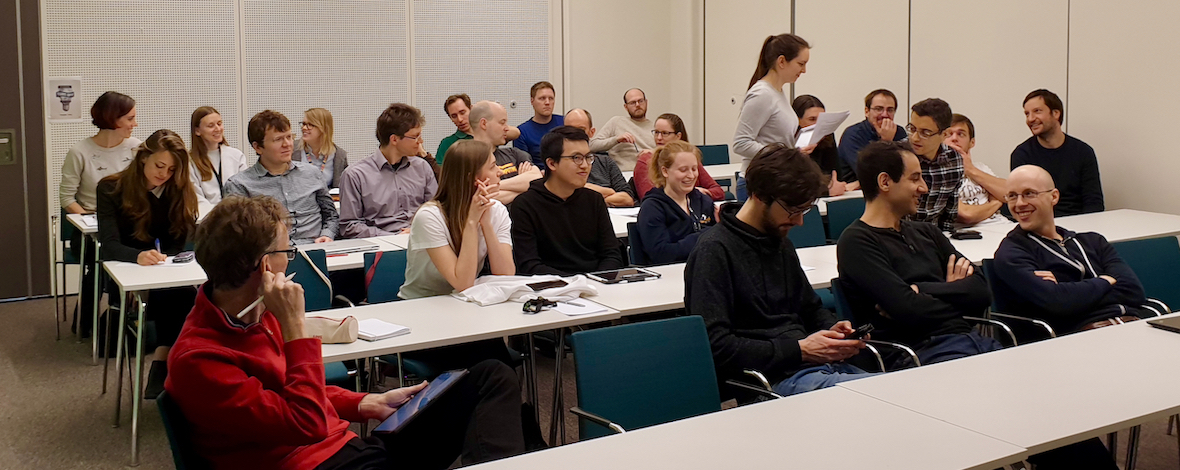
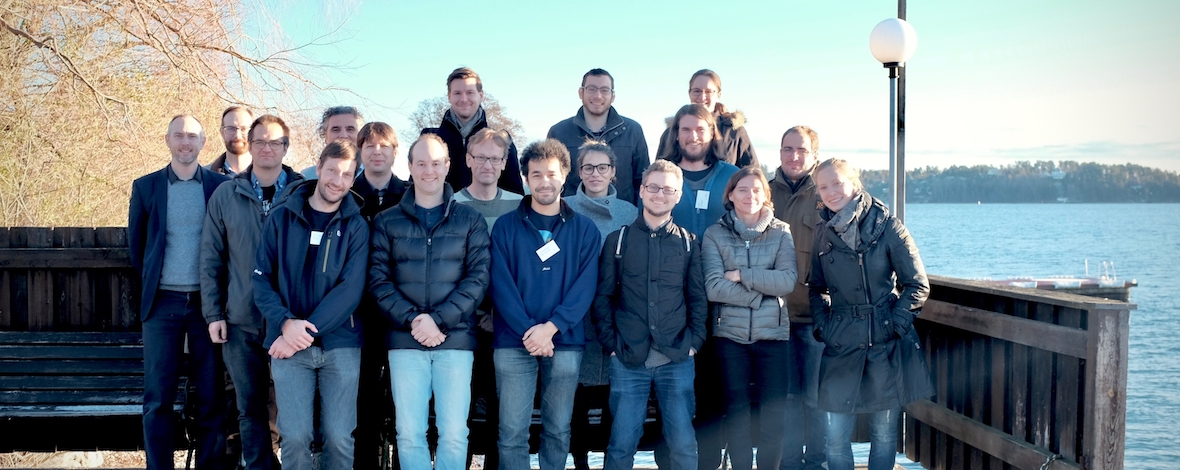
Twenty-three members of Molecular Biophysics Stockholm gathered for our fall off-site retreat, 24–25 October 2019 at historic Vår Gård in Saltsjöbaden, Sweden, workshopping topics related to individual core competencies, academic and industry CVs, group networking, and team communication. Thanks to co-organizers Annie, Joe, Lucie, Reba, and Urška, and to Vår Gård for a beautiful autumn getaway!

GROMACS team 
Communication workshop 
Group discussion 
Happy hour
Channels on the Coast
Four current and former members of Molecular Biophysics Stockholm, along with multiple collaborators, presented their research at the 2019 Jacques Monod Conference Canaux ioniques activés par les ligands: de la structure atomique à la transmission synaptique (Ligand-gated ion channels from atomic structure to synaptic transmission) 24–29 May 2019 in Roscoff, France. Among others, Reba Howard gave an invited talk on Biochemical and simulation studies of allosteric mechanisms in a model Cys-loop receptor.
Biophysics Abroad
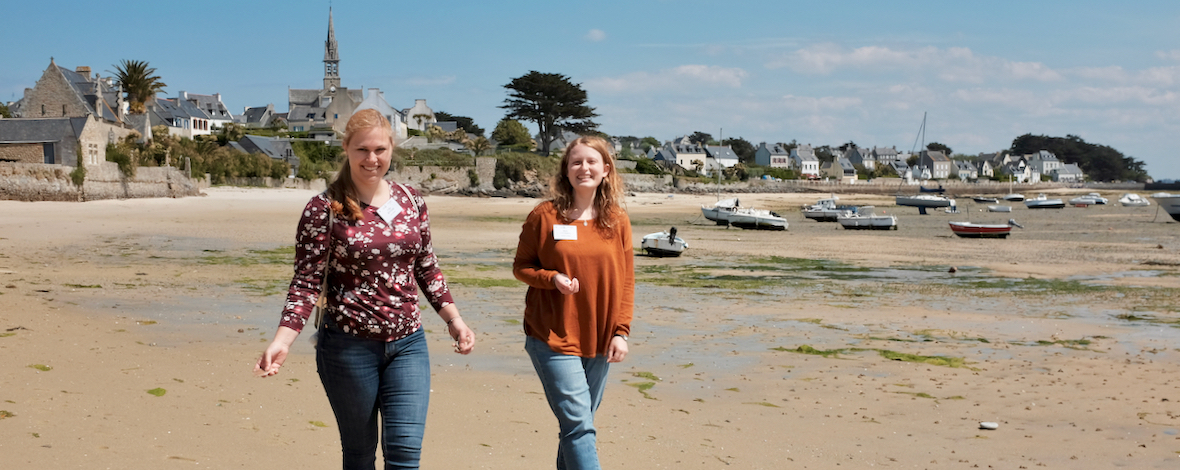
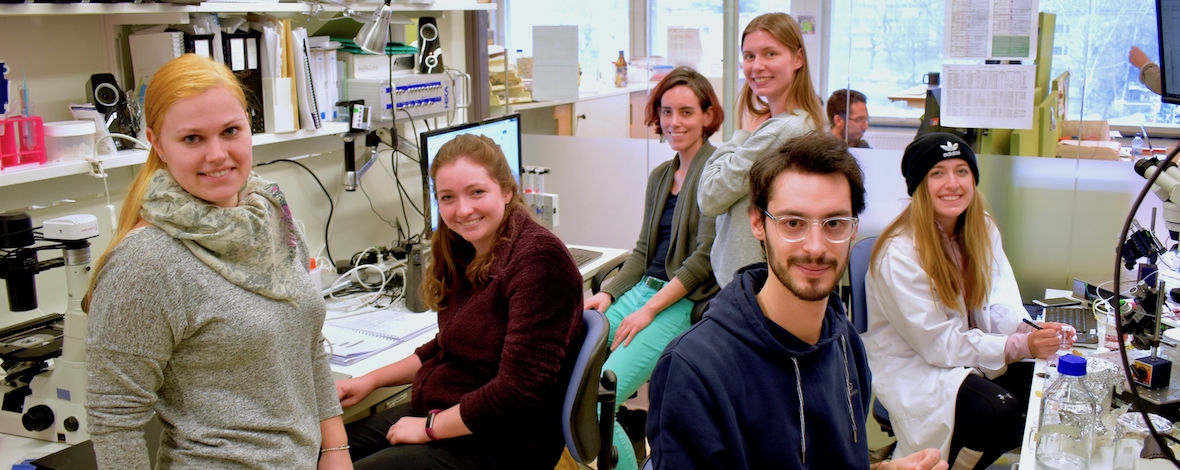
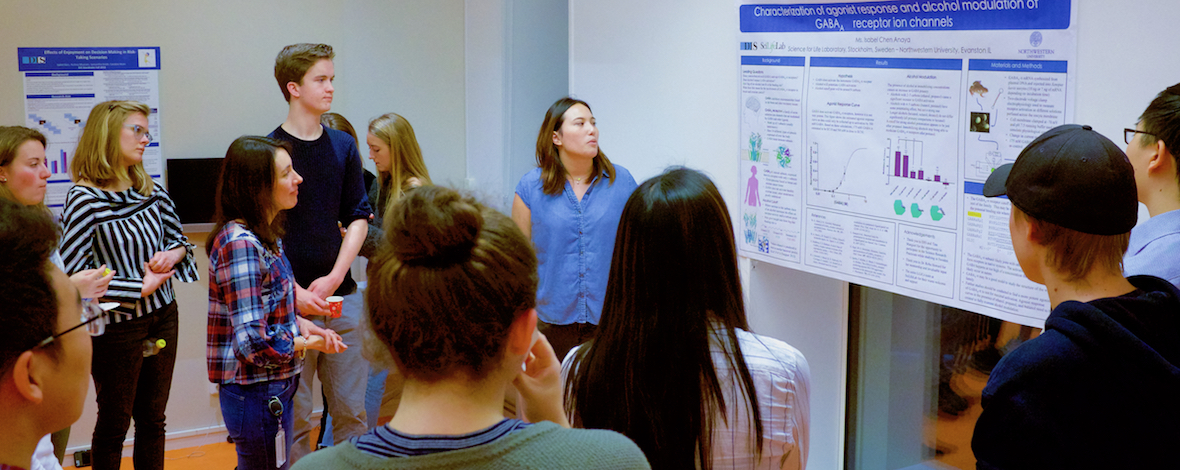
Molecular Biophysics Stockholm again hosted two US undergraduates through the DIS-Study Abroad in Scandinavia Stockholm program in Spring 2019. Under the supervision of Reba Howard and Urška Rovšnik, Sarah Komon (Wheaton College) and Nicole Sanford (St Olaf College) worked ≥20 hours per week on independent projects in the Ligand-Gated Ion Channels team throughout the term, including data collection at both the Science for Life Laboratory and Umeå University. Each presented a research poster at the DIS End-of-Semester Symposium, 7 May 2019 at Stockholm’s Kungliga Musikhögskolan. For an interview with Komon and Sanford regarding their experiences, visit the DIS blog Discover Study Abroad.
Two new DIS students will initiate research projects with the team in Fall 2019. For more information, contact Reba or DIS-Stockholm.
2019 Spring Workshop
Thirty members of Molecular Biophysics Stockholm, representing thirteen countries and a range of research areas, gathered for a spring mini-retreat on 8 April 2019 at the Science for Life Laboratory in Solna, Sweden. Gabriella Fägerlind of Uppsala’s Implement Diversity AB led a workshop on inclusivity and psychological safety in the academic workplace, followed by small- and large-group exercises around goal-setting and group resource development, and an evening pizza party.
Berzelius Days 2019
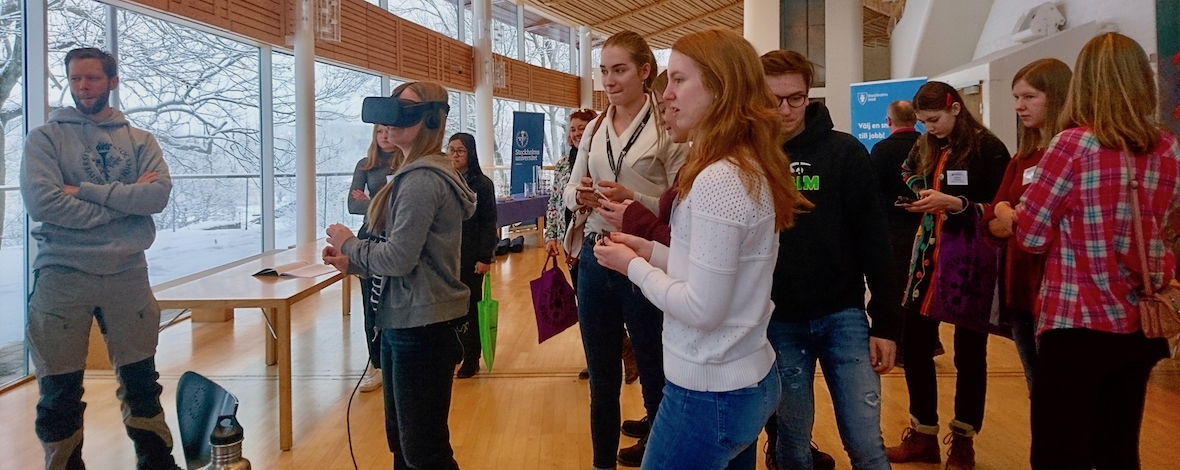
Marie, Cathrine and Erik represented the Molecular Biophysics group at the Berzelius days at Stockholm University January 25-26th 2019. High-school students were introduced to interesting aspects of biophysics and had the opportunity to explore a structure involved in the formation of the skin barrier using Oculus Rift. Hopefully this has sparked the interest of future research talents.
Workshopping Sharing
Eight members of Molecular Biophysics Stockholm helped host an international workshop on Sharing Data from Molecular Simulations, 25–27 November on Lidingö in the Stockholm archipelago. Researchers from 13 institutions in 8 countries sought to explore and improve the dissemination of data and code related to molecular simulations and related methods in computational biology/chemistry. Major topics included:
- Standardization of file formats
- Tools for trajectory sharing
- Streamlining molecular simulations data
- Reproducibility of molecular simulations
Lucie Delemotte and Reba Howard co-organized the workshop with Matthieu Chavent (IPBS), Daniel Smith (MolSSI), and Mikael Trellet (Utrecht), with sponsorship from Rossen Apostolov at BioExcel. Among the participants were session chair Mark Abraham and invited speaker Erik Lindahl.
Although this exploratory workshop was limited in scale, organizers sought to maximize transparency by live-tweeting the proceedings (#SDMS18) and making videos of all talks and roundtable discussions, as well as original presentation slides, available for download via BioExcel.
A follow-up event, organized by MolSSI, is planned for 2019 in the USA.
Biophysics Abroad
Molecular Biophysics Stockholm was the first external research site to host US undergraduates through the recently launched DIS-Study Abroad in Scandinavia Stockholm program in Fall 2018. Under the supervision of Reba Howard, Isabel Anaya (Northwestern University) and Jaewon Kang (Vassar College) worked ≥20 hours per week on independent research projects in the Ligand-Gated Ion Channels team throughout the term. Both presented posters on their work at the DIS End-of-Semester Symposium, 11 December 2018 at Stockholm’s Kungliga Musikhögskolan.
Two new DIS students will initiate research projects with the team in Spring 2019. For more information, contact Reba or DIS-Stockholm.
Multiscale Modeling in Tokyo
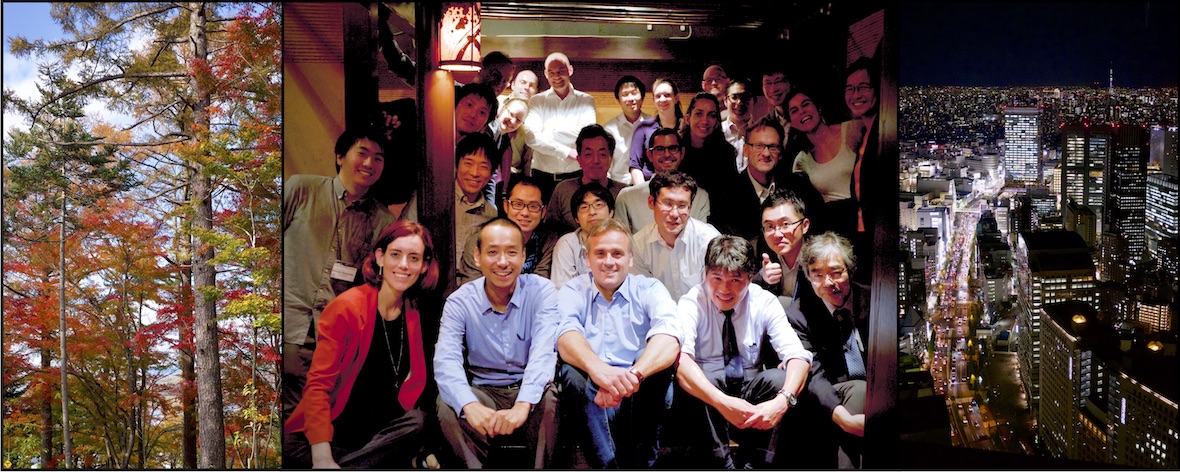
Five members of Molecular Biophysics Stockholm presented their research and discussed prospective collaborations at the 2nd Stockholm-Tokyo University Partnership Workshop, held this year in Japan, 28–30 October 2018. Among others, Erik Lindahl co-chaired a plenary session on Biological Mechanisms Regulating Healthy and Maladaptive Aging, and co-coordinated a satellite workshop on New Technologies: Multiscale Computation. Following the workshop, group members were generously hosted by their University of Tokyo colleagues in multiscale simulations and electron microscopy for a traditional meal in the Hongō district.
GROMACS Workshop October 2018
The 2018 workshop, 17–19 October in Göttingen, set out to provide opportunities for GROMACS developers and power-users to use or implement their own enhanced simulation protocols, involving for example fast multipole methods, constant pH, or experimental constraints from microscopy/spectroscopy. Key questions included:
- How can a highly optimized, parallel simulation code provide a general infrastructure that allows incorporation of new methods in a straightforward way?
- Can it do so without sacrificing (parallel) performance?
- Can the software be made less monolithic and blackbox-like, but more modular and extensible?
- Can providing an own method become less of a challenge for the average scientist who is not at the same time a GROMACS coding expert?
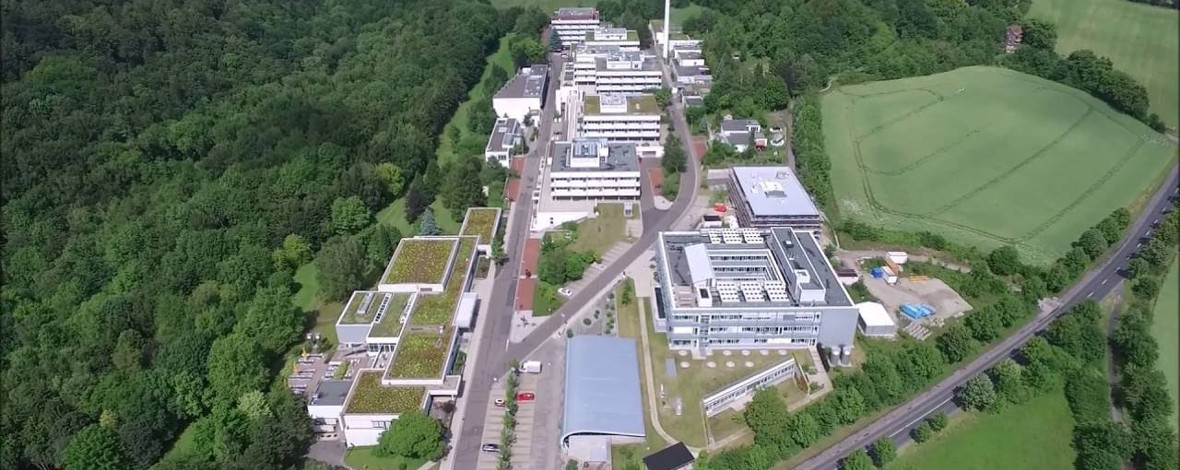
Thanks to sponsors BioExcel and SPPEXA, and to the Theoretical and Computational Biophysics group at the Max Planck Institute for Biophysical Chemistry for venue and other support.