News

Publications

Elastic Networks on the Net

For the September 2019 issue of Bioinformatics (v. 35 pp. 3505–3507):

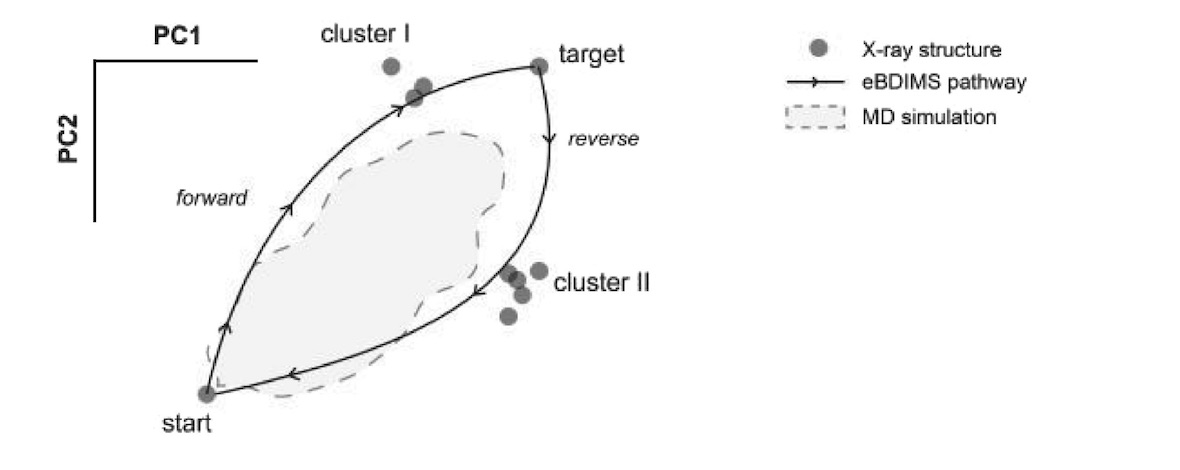
eBDIMS server: protein transition pathways with ensemble analysis in 2D-motion spaces

Laura Orellana, Johan Gustavsson, Cathrine Bergh, Ozge Yoluk, Erik Lindahl

Understanding how proteins transition between different conformers, and how conformers relate to each other in terms of structure and function, is not trivial. Here, we present an online tool for transition pathway generation between two protein conformations using Elastic Network Driven Brownian Dynamics Importance Sampling, a coarse-grained simulation algorithm, which spontaneously predicts transition intermediates trapped experimentally. In addition to path-generation, the server provides an interactive 2D-motion landscape graphical representation of the transitions or any additional conformers to explore their structural relationships.

Read the full publication here.

News

Berzelius Days 2019

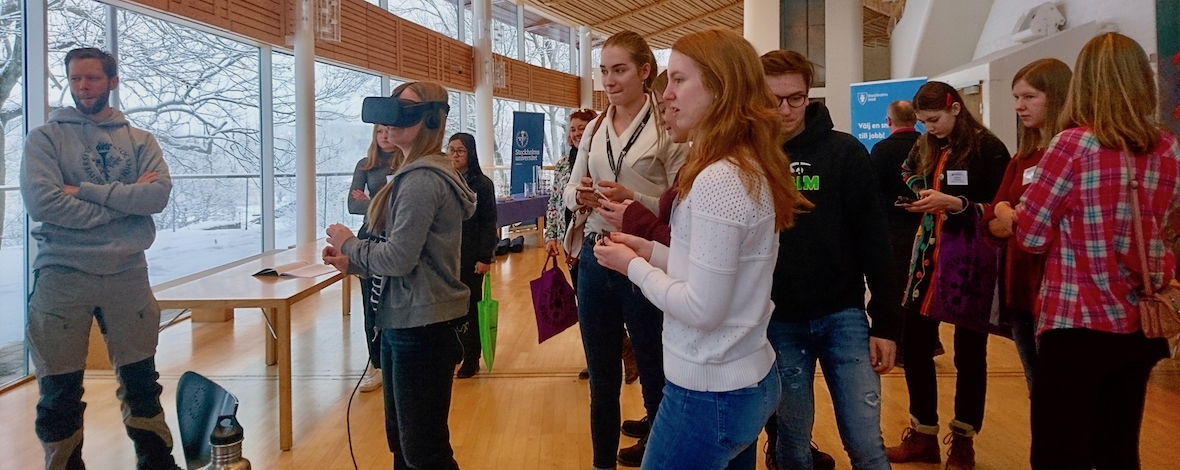
Marie, Cathrine and Erik represented the Molecular Biophysics group at the Berzelius days at Stockholm University January 25-26th 2019. High-school students were introduced to interesting aspects of biophysics and had the opportunity to explore a structure involved in the formation of the skin barrier using Oculus Rift. Hopefully this has sparked the interest of future research talents.

Publications

Reproducibility rules

Released 17 January 2019 in PLOS Computational Biology (v. 15 art. e1006649):

Ten simple rules on how to create open access and reproducible molecular simulations of biological systems

Arne Elofsson, Berk Hess, Erik Lindahl, Alexey Onufriev, David van der Spoel, Anders Wallqvist

All PLOS journals have an open data policy that, amongst other things, states that all data and related metadata underlying the findings reported in a submitted manuscript should be deposited in an appropriate public repository, or for smaller datasets, as supporting information. This should obviously apply to computational methods as well, but unfortunately this is not always applied in practice, although it is of greatest importance for the scientific quality of simulations and other modeling projects.

Molecular dynamics and other type of simulations have become a fundamental part of life sciences. The simulations are dependent on a number of parameters such as force fields, initial configurations, simulation protocols, and software. Researchers have different opinions about the types of software they prefer, and in general, we believe authors should be free to choose the tools that best fit their needs. However, as scientists, we also have a common obligation to critically test each other’s statements to find mistakes (including errors in the algorithms and bugs in the code), which can be exemplified by a heated debate over simulations of supercooled water that ended up being due to a subtle algorithmic issue, and we believe PLOS has a particularly strong responsibility to lead this development even if it might cause some short-term grief.

In particular, all published results should, in principle, be possible to reproduce independently by scientists in other labs using different tools. To ensure this, we propose a set of standards that any publication in PLOS Computational Biology, and hopefully, publications in other journals as well, should follow. We do believe that the sooner such policies are widely adapted, the more open and collaborative science will flourish.

These 10 simple rules should not be limited to molecular dynamics but also include Monte Carlo simulations, quantum mechanics calculations, molecular docking, and any other computational methods involving computations on biological molecules.

Read the full publication here.

Publications

e-Science in Scandinavia

From the December 2018 release of Informatik Spektrum (v. 41 pp. 398–404):

e-Science in Scandinavia: The Case of the Swedish e-Science Research Center

Olivia Eriksson, Erwin Laure, Erik Lindahl, Dan Henningson & Anders Ynnerman

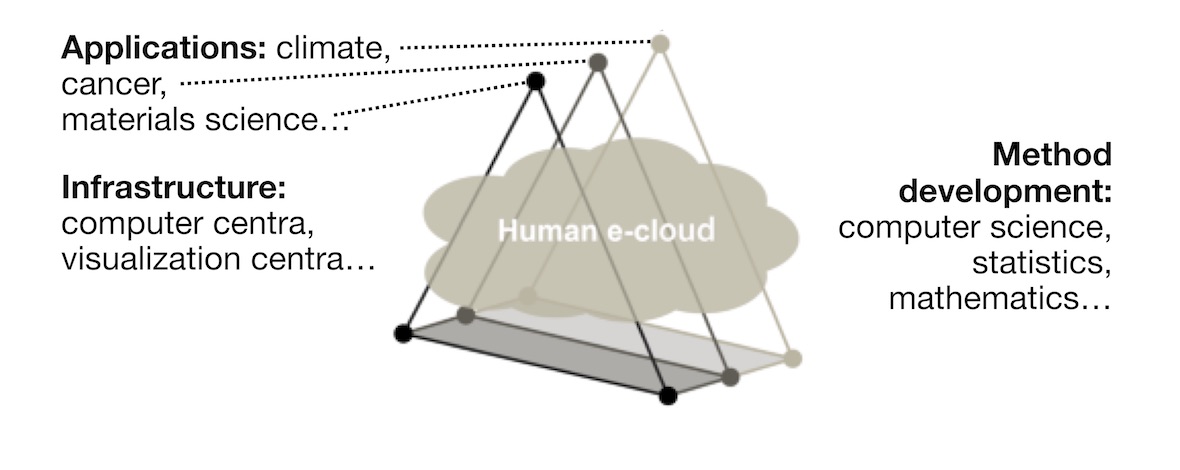
The Swedish e-Science Research Centre (SeRC) is based on a collaboration between four Swedish universities: The KTH Royal Institute of Technology (KTH), Stockholm University (SU), Karolinska Institutet (KI) and Linköping University (LiU). SeRC’s mission statement is to develop state-of-the-art eScience tools and provide e-infrastructure support to existing and emerging e-Science research communities to help bring about scientific breakthroughs in Sweden. SeRC was founded in 2010 as the result of the Strategic Research Area (SRA) initiative launched by the Swedish Government Bill on Research Policy in 2008, where a total of 24 different strategic research areas were defined – one of which was e-Science. Initially SeRC was granted funding for 5 years. During those first 5 years, SeRC built up an organization for e-Science research, which has been highly successful. This was reflected in the excellent grades that SeRC received when the SRAs in Sweden were evaluated in 2015, and the fact that after this, SeRC received funding for at least 5 more years. This new phase of SeRC partly focuses on activities relating to emerging technologies (such as exascale systems and data-driven science) while also consolidating SeRC’s ongoing efforts in working towards a long-lasting e-Science environment in Sweden.

Read the full publication here.

News

Workshopping Sharing

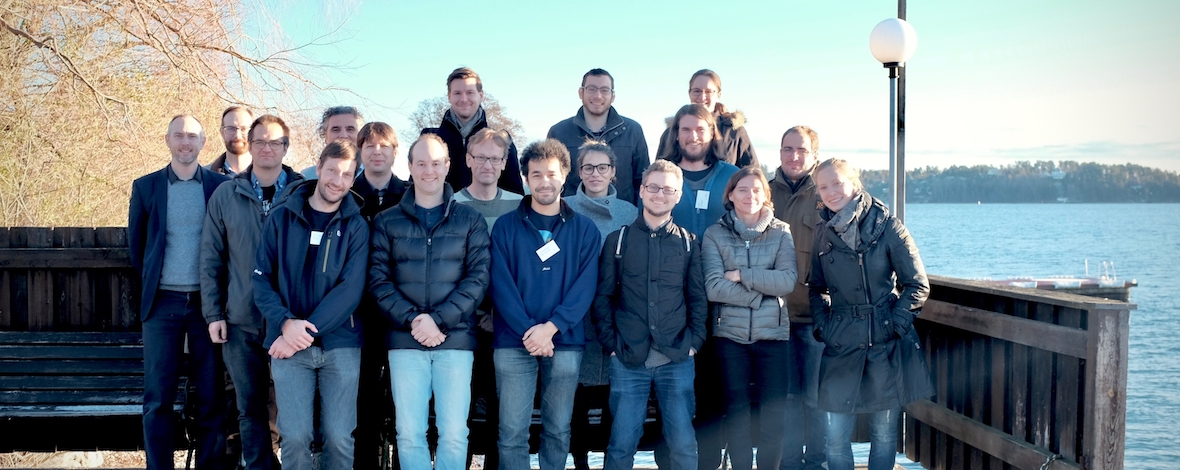
Eight members of Molecular Biophysics Stockholm helped host an international workshop on Sharing Data from Molecular Simulations, 25–27 November on Lidingö in the Stockholm archipelago. Researchers from 13 institutions in 8 countries sought to explore and improve the dissemination of data and code related to molecular simulations and related methods in computational biology/chemistry. Major topics included:

  • Standardization of file formats
  • Tools for trajectory sharing
  • Streamlining molecular simulations data
  • Reproducibility of molecular simulations

Lucie Delemotte and Reba Howard co-organized the workshop with Matthieu Chavent (IPBS), Daniel Smith (MolSSI), and Mikael Trellet (Utrecht), with sponsorship from Rossen Apostolov at BioExcel. Among the participants were session chair Mark Abraham and invited speaker Erik Lindahl.

Although this exploratory workshop was limited in scale, organizers sought to maximize transparency by live-tweeting the proceedings (#SDMS18) and making videos of all talks and roundtable discussions, as well as original presentation slides, available for download via BioExcel.

A follow-up event, organized by MolSSI, is planned for 2019 in the USA.

News

Biophysics Abroad

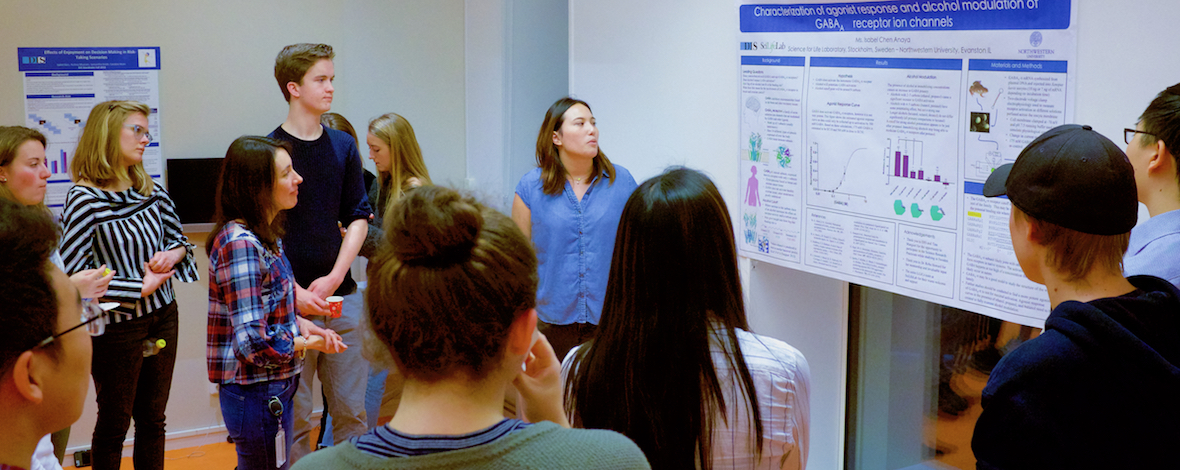
Molecular Biophysics Stockholm was the first external research site to host US undergraduates through the recently launched DIS-Study Abroad in Scandinavia Stockholm program in Fall 2018. Under the supervision of Reba Howard, Isabel Anaya (Northwestern University) and Jaewon Kang (Vassar College) worked ≥20 hours per week on independent research projects in the Ligand-Gated Ion Channels team throughout the term. Both presented posters on their work at the DIS End-of-Semester Symposium, 11 December 2018 at Stockholm’s Kungliga Musikhögskolan.

Two new DIS students will initiate research projects with the team in Spring 2019. For more information, contact Reba or DIS-Stockholm.

Publications

RELION Refined

Accepted manuscript, posted ahead of online November 9, 2018 in eLife (v. 7 art. e42166):

New tools for automated high-resolution cryo-EM structure determination in RELION-3

Jasenko Zivanov, Takanori Nakane, Björn O Forsberg, Dari Kimanius, Wim JH Hagen, Erik Lindahl & Sjors HW Scheres

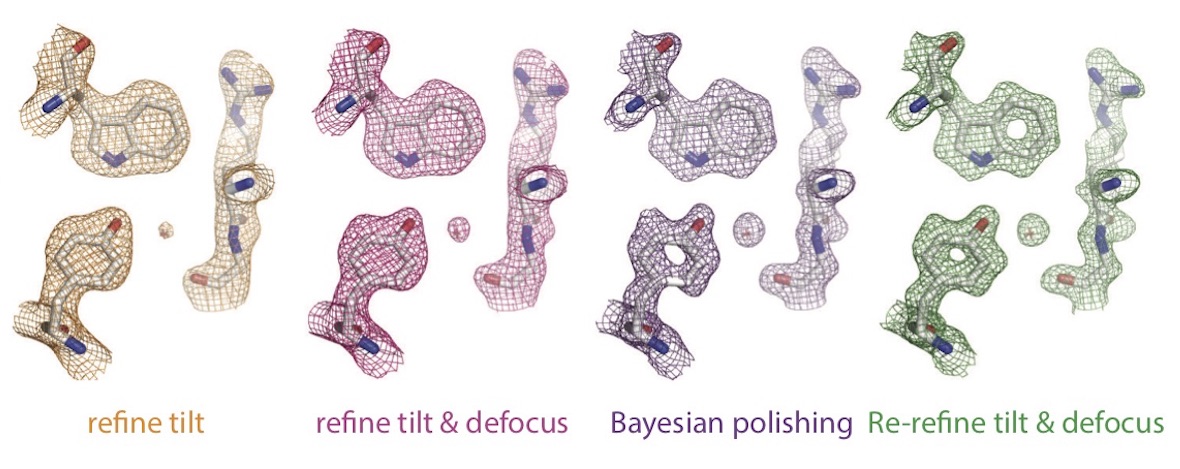
Here, we describe the third major release of RELION. CPU-based vector acceleration has been added in addition to GPU support, which provides flexibility in use of resources and avoids memory limitations. Reference-free autopicking with Laplacian-of-Gaussian filtering and execution of jobs from python allows non-interactive processing during acquisition, including 2D-classification, de novo model generation and 3D-classification. Per-particle refinement of CTF parameters and correction of estimated beam tilt provides higher-resolution reconstructions when particles are at different heights in the ice, and/or coma-free alignment has not been optimal. Ewald sphere curvature correction improves resolution for large particles. We illustrate these developments with publicly available data sets: together with a Bayesian approach to beam-induced motion correction it leads to resolution improvements of 0.2–0.7 Å compared to previous RELION versions.

Read the full publication here.
News

Multiscale Modeling in Tokyo

Five members of Molecular Biophysics Stockholm presented their research and discussed prospective collaborations at the 2nd Stockholm-Tokyo University Partnership Workshop, held this year in Japan, 28–30 October 2018. Among others, Erik Lindahl co-chaired a plenary session on Biological Mechanisms Regulating Healthy and Maladaptive Aging, and co-coordinated a satellite workshop on New Technologies: Multiscale Computation. Following the workshop, group members were generously hosted by their University of Tokyo colleagues in multiscale simulations and electron microscopy for a traditional meal in the Hongō district.

MPIBPC
News

GROMACS Workshop October 2018

The 2018 workshop, 17–19 October in Göttingen, set out to provide opportunities for GROMACS developers and power-users to use or implement their own enhanced simulation protocols, involving for example fast multipole methods, constant pH, or experimental constraints from microscopy/spectroscopy. Key questions included:

  • How can a highly optimized, parallel simulation code provide a general infrastructure that allows incorporation of new methods in a straightforward way?
  • Can it do so without sacrificing (parallel) performance?
  • Can the software be made less monolithic and blackbox-like, but more modular and extensible?
  • Can providing an own method become less of a challenge for the average scientist who is not at the same time a GROMACS coding expert?

Thanks to sponsors BioExcel and SPPEXA, and to the Theoretical and Computational Biophysics group at the Max Planck Institute for Biophysical Chemistry for venue and other support.

Publications

Dynamic Basis for Drug Binding

From the October 16, 2018 issue of Proceedings of the National Academy of Sciences of the USA (v. 115 pp. 10672–10677):

Allosteric potentiation of a ligand-gated ion channel is mediated by access to a deep membrane-facing cavity

Stephanie A Heusser, Marie Lycksell, Xueqing Wang, Sarah E McComas, Rebecca J Howard & Erik Lindahl

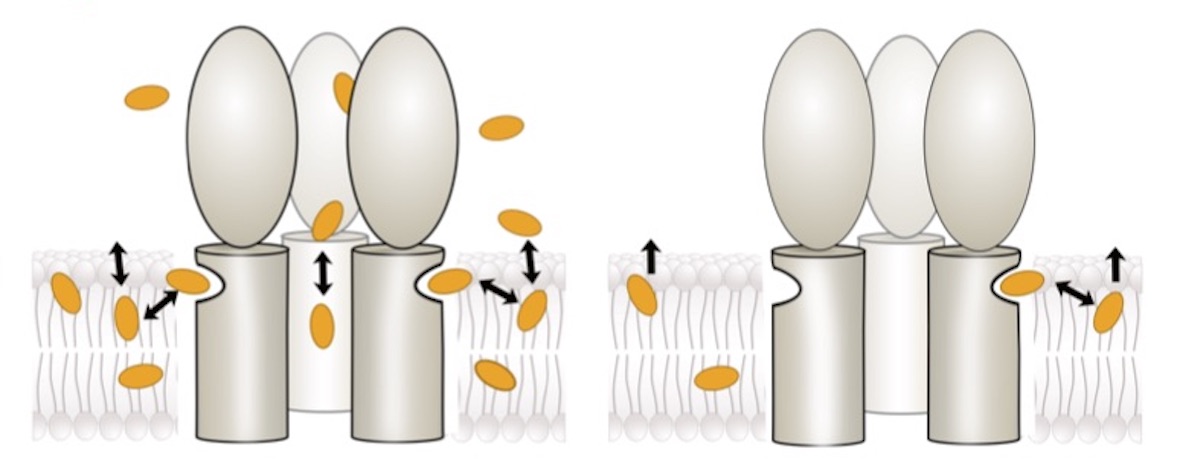
Molecular mechanisms of general anesthetic modulation in pentameric ligand-gated ion channels remain controversial. Here we present molecular simulations and functional data that reveal correlations between dynamic differences in a membrane-accessible cavity and dramatic anesthetic effects, separate inhibitory and potentiating effects within the same electrophysiology recordings, and support a model for communication between the lipid bilayer and ion channel pore. In particular, enhanced electrostatic interactions in the membrane-accessible site were associated with a unique mode of anesthetic potentiation, persisting tens of minutes after washout. These results offer a bridge between lipid- and receptor-based theories of anesthesia, with the potential to inform both mechanistic understanding and drug development.

Read the full publication here.