Publications

MSMs for Proton Gating

Published 15 October 2021 in eLife (doi 10.7554/eLife.68369):

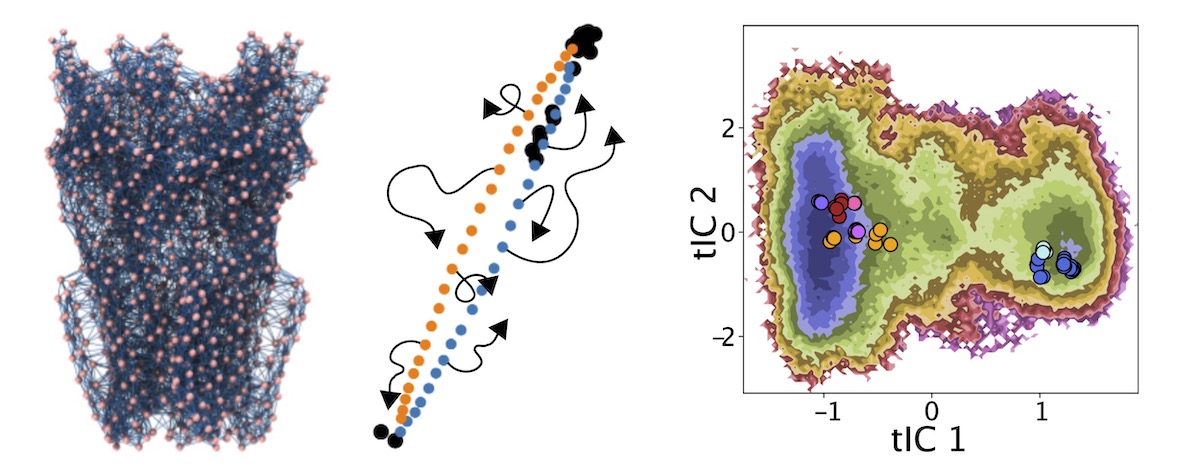
Markov state models of proton- and pore-dependent activation in a pentameric ligand-gated ion channel

Cathrine BerghStephanie A HeusserRebecca HowardErik Lindahl

Ligand-gated ion channels conduct currents in response to chemical stimuli, mediating electrochemical signaling in neurons and other excitable cells. For many channels the details of gating remain unclear, partly due to limited structural data and simulation timescales. Here, we used enhanced sampling to simulate the pH-gated channel GLIC, and construct Markov state models (MSMs) of gating. Consistent with new functional recordings we report in oocytes, our analysis revealed differential effects of protonation and mutation on free-energy wells. Clustering of closed- versus open-like states enabled estimation of open probabilities and transition rates, while higher-order clustering affirmed conformational trends in gating. Furthermore, our models uncovered state- and protonation-dependent symmetrization. This demonstrates the applicability of MSMs to map energetic and conformational transitions between ion-channel functional states, and how they reproduce shifts upon activation or mutation, with implications for modeling neuronal function and developing state-selective drugs.

Read the full publication here.
Publications

Tracking Protons with Neutrons

Published 14 September 2021 in Proceedings of the National Academy of Sciences of the USA (doi 10.1073/pnas.2108006118):

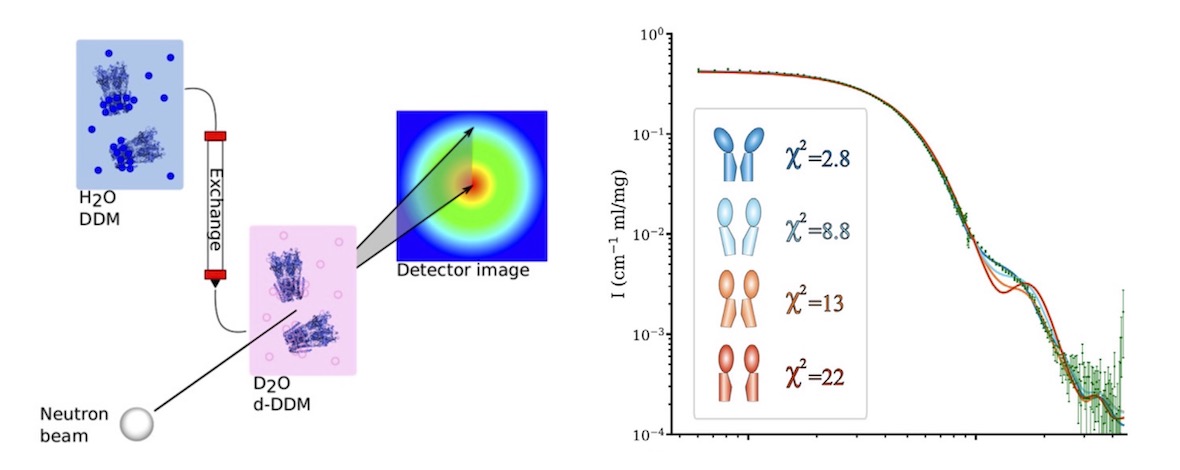
Probing solution structure of the pentameric ligand-gated ion channel GLIC by small-angle neutron scattering

Marie LycksellUrška RovšnikCathrine Bergh, Nicolai T. Johansen, Anne Martel, Lionel Porcar, Lise Arleth, Rebecca J HowardErik Lindahl

Pentameric ligand-gated ion channels undergo subtle conformational cycling to control electrochemical signal transduction in many kingdoms of life. Several crystal structures have now been reported in this family, but the functional relevance of such models remains unclear. Here, we used small-angle neutron scattering (SANS) to probe ambient solution-phase properties of the pH-gated bacterial ion channel GLIC under resting and activating conditions. Data collection was optimized by inline paused-flow size-exclusion chromatography, and exchanging into deuterated detergent to hide the micelle contribution. Resting-state GLIC was the best-fit crystal structure to SANS curves, with no evidence for divergent mechanisms. Moreover, enhanced-sampling molecular-dynamics simulations enabled differential modeling in resting versus activating conditions, with the latter corresponding to an intermediate ensemble of both the extracellular and transmembrane domains. This work demonstrates state-dependent changes in a pentameric ion channel by SANS, an increasingly accessible method for macromolecular characterization with the coming generation of neutron sources.

Read the full publication here.
Publications

Proton Gating by CryoEM

Available online 1 July 2021 in Life Science Alliance (doi 10.26508/lsa.202101011):

Dynamic closed states of a ligand-gated ion channel captured by cryo-EM and simulations

Urška RovšnikYuxuan ZhuangBjörn O Forsberg, Marta Carroni, Linnea YvonnesdotterRebecca J HowardErik Lindahl 

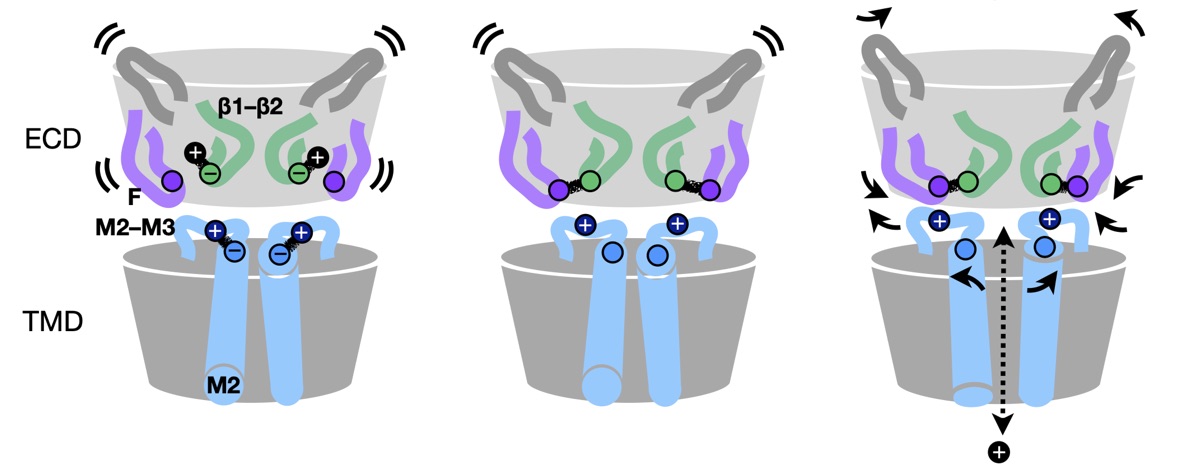
Ligand-gated ion channels are critical mediators of electrochemical signal transduction across evolution. Biophysical and pharmacological characterization of these receptor proteins relies on high-quality structures in multiple, subtly distinct functional states. However, structural data in this family remain limited, particularly for resting and intermediate states on the activation pathway. Here, we report cryo-electron microscopy (cryo-EM) structures of the proton-activated Gloeobacter violaceus ligand-gated ion channel (GLIC) under three pH conditions. Decreased pH was associated with improved resolution and side chain rearrangements at the subunit/domain interface, particularly involving functionally important residues in the β1–β2 and M2–M3 loops. Molecular dynamics simulations substantiated flexibility in the closed-channel extracellular domains relative to the transmembrane ones and supported electrostatic remodeling around E35 and E243 in proton-induced gating. Exploration of secondary cryo-EM classes further indicated a low-pH population with an expanded pore. These results allow us to define distinct protonation and activation steps in pH-stimulated conformational cycling in GLIC, including interfacial rearrangements largely conserved in the pentameric channel family.

Read the full publication here.
Publications

Illuminating pLGICs

Available online 3 July 2021 in the Journal of Molecular Biology (doi 10.1016/j.jmb.2021.167128):

Elephants in the dark: insights and incongruities in pentameric ligand-gated ion channel models

Rebecca J Howard

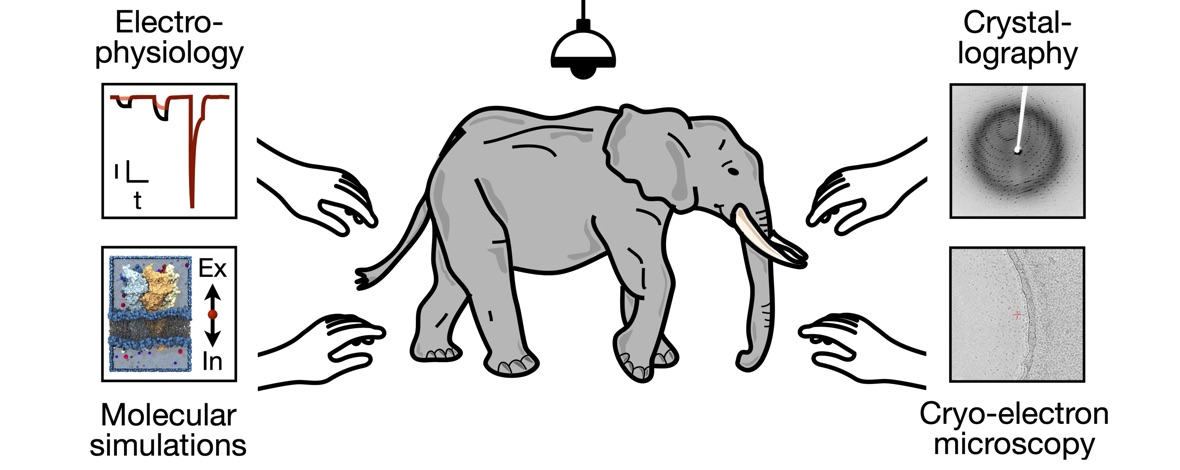
The superfamily of pentameric ligand-gated ion channels (pLGICs) comprises key players in electrochemical signal transduction across evolution, including historic model systems for receptor allostery and targets for drug development. Accordingly, structural studies of these channels have steadily increased, and now approach 250 depositions in the protein data bank. This review contextualizes currently available structures in the pLGIC family, focusing on morphology, ligand binding, and gating in three model subfamilies: the prokaryotic channel GLIC, the cation-selective nicotinic acetylcholine receptor, and the anion-selective glycine receptor. Common themes include the challenging process of capturing and annotating channels in distinct functional states; partially conserved gating mechanisms, including remodeling at the extracellular/transmembrane-domain interface; and diversity beyond the protein level, arising from posttranslational modifications, ligands, lipids, and signaling partners. Interpreting pLGIC structures can be compared to describing an elephant in the dark, relying on touch alone to comprehend the many parts of a monumental beast: each structure represents a snapshot in time under specific experimental conditions, which must be understood and integrated with further structure, function, and simulations data to build a comprehensive model, and understand how one channel may fundamentally differ from another.

Read the full publication here.
Publications

Cation-π Lipid-Channel Binding

Available online 19 June 2021 in the Journal of Biological Chemistry (doi 10.1016/j.jbc.2021.100899):

Regulation of a pentameric ligand-gated ion channel by a semi-conserved cationic-lipid binding site

Akshay Sridhar*, Sarah CR Lummis*, Diletta Pasini, Aujan Mehregan, Marijke Brams, Kumiko Kambara, Daniel Bertrand, Erik Lindahl, Rebecca J Howard, Chris Ulens

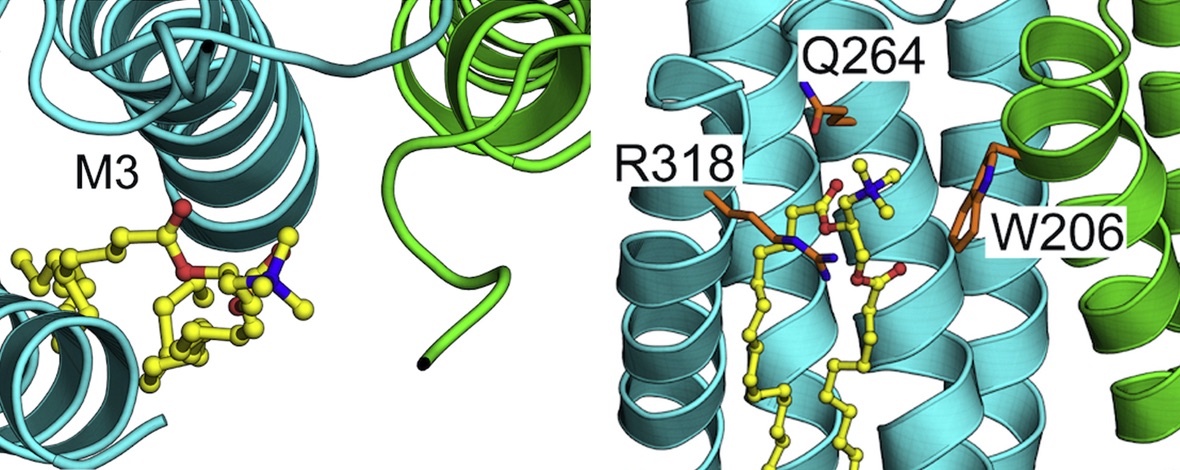
Pentameric ligand-gated ion channels (pLGICs) are crucial mediators of electrochemical signal transduction in various organisms from bacteria to humans. Lipids play an important role in regulating pLGIC function, yet the structural bases for specific pLGIC-lipid interactions remain poorly understood. The bacterial channel ELIC recapitulates several properties of eukaryotic pLGICs, including activation by the neurotransmitter GABA, and binding and modulation by lipids, offering a simplified model system for structure-function relationship studies. In this study, functional effects of non-canonical amino acid substitution of a potential lipid-interacting residue (W206) at the top of the M1-helix, combined with detergent interactions observed in recent X-ray structures, are consistent with this region being the location of a lipid binding site on the outward face of the ELIC transmembrane domain. Coarse-grained and atomistic molecular dynamics simulations revealed preferential binding of lipids containing a positive charge, particularly involving interactions with residue W206, consistent with cation-π binding. Polar contacts from other regions of the protein, particularly M3 residue Q264, further support lipid binding via headgroup ester linkages. Aromatic residues were identified at analogous sites in a handful of eukaryotic family members, including the human GABAA receptor ε subunit, suggesting conservation of relevant interactions in other evolutionary branches. Further mutagenesis experiments indicated that mutations at this site in ε-containing GABAA receptors can change the apparent affinity of the agonist response to GABA, suggesting a potential role of this site in channel gating. In conclusion, this work details type-specific lipid interactions, which adds to our growing understanding of how lipids modulate pLGICs.

Read the full publication here.
*equal contributions

Publications

Trends in Ion-Channel MD

Available online 30 April 2021 in Trends in Biochemical Sciences (doi 10.1016/j.tibs.2021.04.005):

Molecular dynamics simulations of ion channels

Vincenzo Carnevale*, Lucie Delemotte*, Rebecca J Howard*

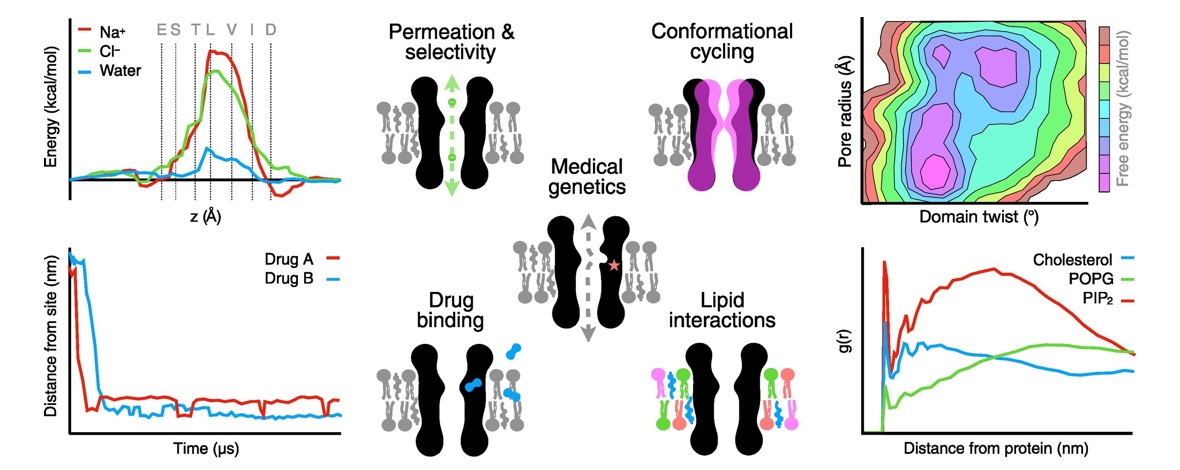
Propelled by enormous increases in computational power, molecular dynamics (MD) simulations were first reported in 1957 by B.J. Alder and T.E. Wainwright and since then have moved from this proof of concept to routinely investigating the dynamics of complex systems composed of up to tens of millions of atoms. MD simulations are based on the idea that the equations of motion of a multi-particle system can be solved numerically within an acceptable level of accuracy; the resulting trajectory is key for calculating occupancy probabilities of distinct conformational states (sampling). In advanced protocols, enhanced sampling ensures wide exploration of the configurational space. Further, a strength of MD simulations is that by starting from descriptions of the motions of all atoms, several data learning techniques can be used to conceptualize trajectories. In ion channel biophysics, these tools are used to study ion permeation, conformational cycling, drug binding, and lipid–channel interactions.

Read the full publication here.

*equal contributions

Publications

Drugging COVID-19 with Dynamics

Published 16 March 2021 in ACS Pharmacology & Translational Sciences (doi 10.1021/acsptsci.0c00215):

A blueprint for high affinity SARS-CoV-2 Mpro inhibitors from activity-based compound library screening guided by analysis of protein dynamics

Jonas Gossen, Simone Albani, Anton Hanke, Benjamin P Joseph, Cathrine Bergh, Maria Kuzikov, Elisa Costanzi, Candida Manelfi, Paola Storici, Philip Gribbon, Andrea R Beccari, Carmine Talarico, Francesca Spyrakis, Erik Lindahl, Andrea Zaliani, Paolo Carloni, Rebecca C Wade, Francesco Musiani, Daria B Kokh, and Giulia Rossetti

The SARS-CoV-2 coronavirus outbreak continues to spread at a rapid rate worldwide. The main protease (Mpro) is an attractive target for anti-COVID-19 agents. Unexpected difficulties have been encountered in the design of specific inhibitors. Here, by analyzing an ensemble of ∼30 000 SARS-CoV-2 Mpro conformations from crystallographic studies and molecular simulations, we show that small structural variations in the binding site dramatically impact ligand binding properties. Hence, traditional druggability indices fail to adequately discriminate between highly and poorly druggable conformations of the binding site. By performing ∼200 virtual screenings of compound libraries on selected protein structures, we redefine the protein’s druggability as the consensus chemical space arising from the multiple conformations of the binding site formed upon ligand binding. This procedure revealed a unique SARS-CoV-2 Mpro blueprint that led to a definition of a specific structure-based pharmacophore. The latter explains the poor transferability of potent SARS-CoV Mpro inhibitors to SARS-CoV-2 Mpro, despite the identical sequences of the active sites. Importantly, application of the pharmacophore predicted novel high affinity inhibitors of SARS-CoV-2 Mpro, that were validated by in vitro assays performed here and by a newly solved X-ray crystal structure. These results provide a strong basis for effective rational drug design campaigns against SARS-CoV-2 Mpro and a new computational approach to screen protein targets with malleable binding sites.

Read the full publication here.

Publications

Homegrown Tests for COVID-19

Published 19 January 2021 in Scientific Reports (doi 10.1038/s41598-020-80352-8):

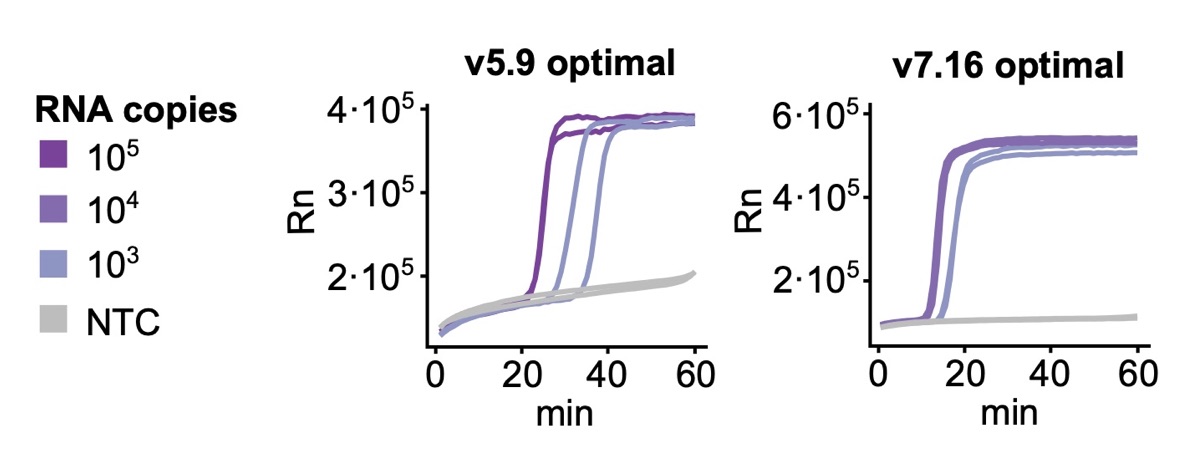
Direct detection of SARS-CoV-2 using non-commercial RT-LAMP reagents on heat-inactivated samples

Alisa Alekseenko, Donal Barrett, Yerma Pareja-Sanchez, Rebecca J Howard, Emilia Strandback, Henry Ampah-Korsah, Urška Rovšnik, Silvia Zuniga-Veliz, Alexander Klenov, Jayshna Malloo, Shenglong Ye, Xiyang Liu, Björn Reinius, Simon J. Elsässer, Tomas Nyman, Gustaf Sandh, Xiushan Yin, Vicent Pelechano

RT-LAMP detection of SARS-CoV-2 has been shown to be a valuable approach to scale up COVID-19 diagnostics and thus contribute to limiting the spread of the disease. Here we present the optimization of highly cost-effective in-house produced enzymes, and we benchmark their performance against commercial alternatives. We explore the compatibility between multiple DNA polymerases with high strand-displacement activity and thermostable reverse transcriptases required for RT-LAMP. We optimize reaction conditions and demonstrate their applicability using both synthetic RNA and clinical patient samples. Finally, we validate the optimized RT-LAMP assay for the detection of SARS-CoV-2 in unextracted heat-inactivated nasopharyngeal samples from 184 patients. We anticipate that optimized and affordable reagents for RT-LAMP will facilitate the expansion of SARS-CoV-2 testing globally, especially in sites and settings where the need for large scale testing cannot be met by commercial alternatives.

Read the full publication here.

Publications

Speedier Simulations with Parallelization

Published 5 October 2020 in The Journal of Chemical Physics (doi 10.1063/5.0018516):

Heterogeneous parallelization and acceleration of molecular dynamics simulations in GROMACS

Szilárd Páll, Artem Zhmurov, Paul Bauer, Mark Abraham, Magnus Lundborg, Alan Gray, Berk Hess, Erik Lindahl

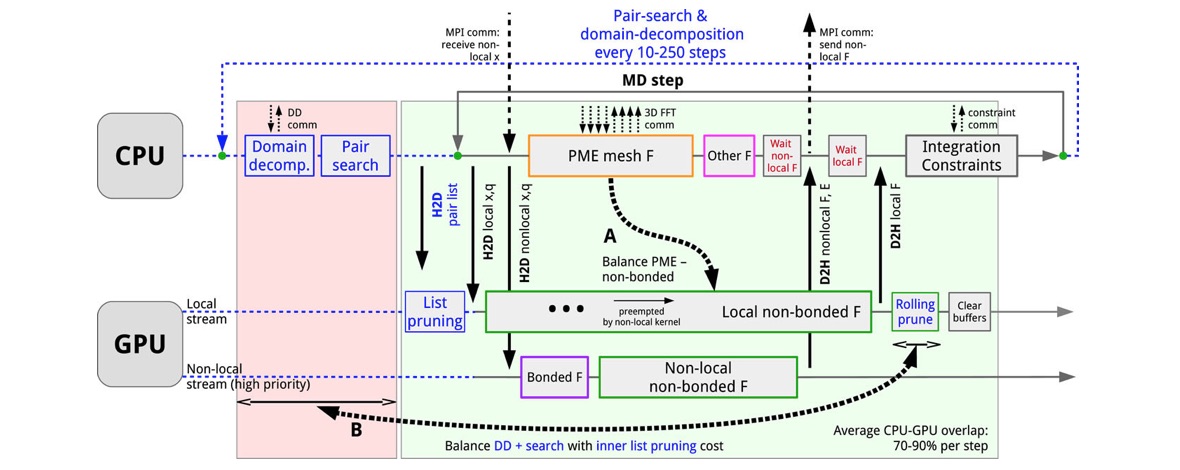
The introduction of accelerator devices such as graphics processing units (GPUs) has had profound impact on molecular dynamics simulations and has enabled order-of-magnitude performance advances using commodity hardware. To fully reap these benefits, it has been necessary to reformulate some of the most fundamental algorithms, including the Verlet list, pair searching, and cutoffs. Here, we present the heterogeneous parallelization and acceleration design of molecular dynamics implemented in the GROMACS codebase over the last decade. The setup involves a general cluster-based approach to pair lists and non-bonded pair interactions that utilizes both GPU and central processing unit (CPU) single instruction, multiple data acceleration efficiently, including the ability to load-balance tasks between CPUs and GPUs. The algorithm work efficiency is tuned for each type of hardware, and to use accelerators more efficiently, we introduce dual pair lists with rolling pruning updates. Combined with new direct GPU–GPU communication and GPU integration, this enables excellent performance from single GPU simulations through strong scaling across multiple GPUs and efficient multi-node parallelization.

Read the full publication here.

Publications

Fungal Metabolism at its Core

Published 16 September 2020 in Nature Communications (doi 10.1038/s41467-020-18401-z):

Arrangement and symmetry of the fungal E3BP-containing core of the pyruvate dehydrogenase complex

Björn O Forsberg, Shintaro Aibara, Rebecca J Howard, Narges Mortezaei, Erik Lindahl

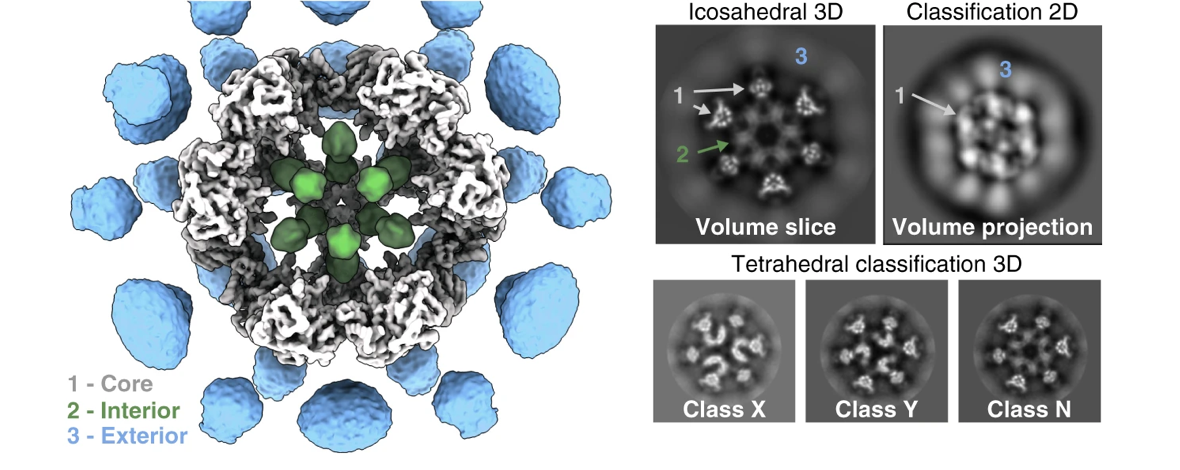
The pyruvate dehydrogenase complex (PDC) is a multienzyme complex central to aerobic respiration, connecting glycolysis to mitochondrial oxidation of pyruvate. Similar to the E3-binding protein (E3BP) of mammalian PDC, PX selectively recruits E3 to the fungal PDC, but its divergent sequence suggests a distinct structural mechanism. Here, we report reconstructions of PDC from the filamentous fungus Neurospora crassa by cryo-electron microscopy, where we find protein X (PX) interior to the PDC core as opposed to substituting E2 core subunits as in mammals. Steric occlusion limits PX binding, resulting in predominantly tetrahedral symmetry, explaining previous observations in Saccharomyces cerevisiae. The PX-binding site is conserved in (and specific to) fungi, and complements possible C-terminal binding motifs in PX that are absent in mammalian E3BP. Consideration of multiple symmetries thus reveals a differential structural basis for E3BP-like function in fungal PDC.

Read the full publication here.