Publications

Unveiling Valium

Published 2 September 2020 in Nature (doi 10.1038/s41586-020-2654-5):

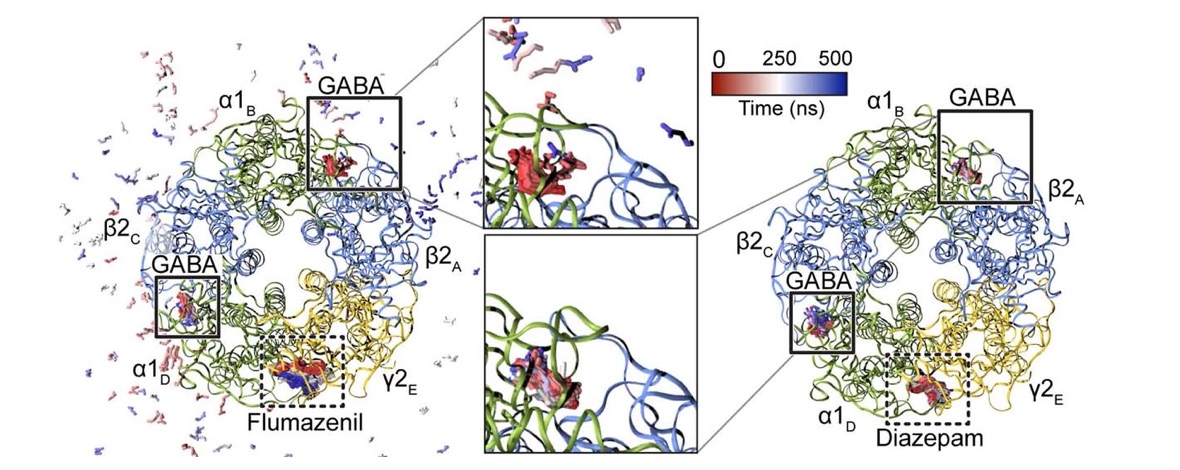
Shared structural mechanisms of general anaesthetics and benzodiazepines

Jeong Joo Kim, Anant Gharpure, Jinfeng Teng, Yuxuan Zhuang, Rebecca J Howard, Shaotong Zhu, Colleen M Noviello, Richard M Walsh Jr, Erik Lindahl, Ryan E Hibbs

Most general anaesthetics and classical benzodiazepine drugs act through positive modulation of γ-aminobutyric acid type A (GABAA) receptors to dampen neuronal activity in the brain. However, direct structural information on the mechanisms of general anaesthetics at their physiological receptor sites is lacking. Here we present cryo-electron microscopy structures of GABAA receptors bound to intravenous anaesthetics, benzodiazepines and inhibitory modulators. These structures were solved in a lipidic environment and are complemented by electrophysiology and molecular dynamics simulations. Structures of GABAA receptors in complex with the anaesthetics phenobarbital, etomidate and propofol reveal both distinct and common transmembrane binding sites, which are shared in part by the benzodiazepine drug diazepam. Structures in which GABAA receptors are bound by benzodiazepine-site ligands identify an additional membrane binding site for diazepam and suggest an allosteric mechanism for anaesthetic reversal by flumazenil. This study provides a foundation for understanding how pharmacologically diverse and clinically essential drugs act through overlapping and distinct mechanisms to potentiate inhibitory signalling in the brain.

Read the full publication here.
Publications

Dramatic Domains of DeCLIC

Published 16 June 2020 in Proceedings of the National Academy of Sciences of the USA (v. 117 pp. 13437–13446):

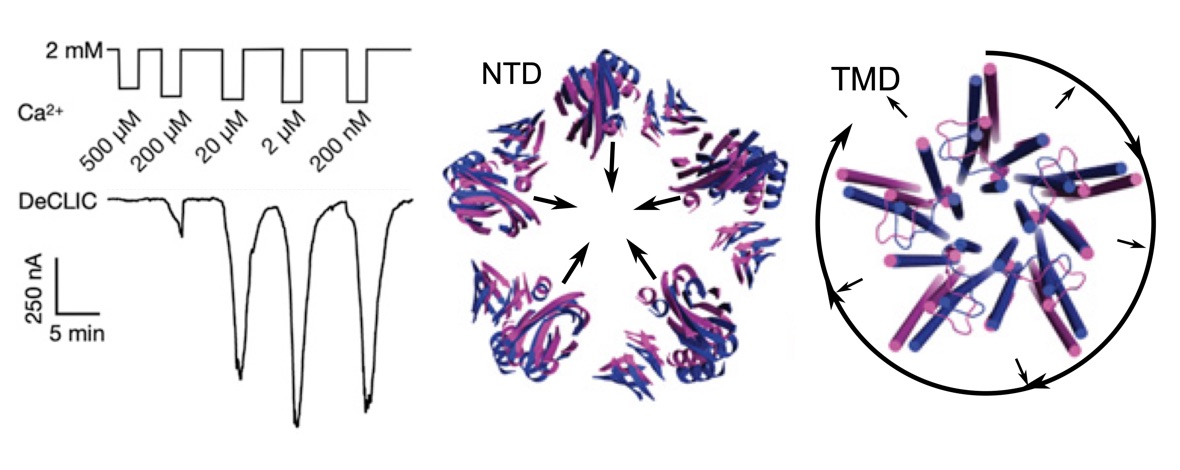
Structural basis for allosteric transitions of a multidomain pentameric ligand-gated ion channel

Haidai Hu, Rebecca J Howard, Ugo Bastolla, Erik Lindahl, Marc Delarue

Pentameric ligand-gated ion channels (pLGICs) are allosteric receptors that mediate rapid electrochemical signal transduction in the animal nervous system through the opening of an ion pore upon binding of neurotransmitters. Orthologs have been found and characterized in prokaryotes and they display highly similar structure–function relationships to eukaryotic pLGICs; however, they often encode greater architectural diversity involving additional amino-terminal domains (NTDs). Here we report structural, functional, and normal-mode analysis of two conformational states of a multidomain pLGIC, called DeCLIC, from a Desulfofustis deltaproteobacterium, including a periplasmic NTD fused to the conventional ligand-binding domain (LBD). X-ray structure determination revealed an NTD consisting of two jelly-roll domains interacting across each subunit interface. Binding of Ca2+ at the LBD subunit interface was associated with a closed transmembrane pore, with resolved monovalent cations intracellular to the hydrophobic gate. Accordingly, DeCLIC-injected oocytes conducted currents only upon depletion of extracellular Ca2+; these were insensitive to quaternary ammonium block. Furthermore, DeCLIC crystallized in the absence of Ca2+ with a wide-open pore and remodeled periplasmic domains, including increased contacts between the NTD and classic LBD agonist-binding sites. Functional, structural, and dynamical properties of DeCLIC paralleled those of sTeLIC, a pLGIC from another symbiotic prokaryote. Based on these DeCLIC structures, we would reclassify the previous structure of bacterial ELIC (the first high-resolution structure of a pLGIC) as a “locally closed” conformation. Taken together, structures of DeCLIC in multiple conformations illustrate dramatic conformational state transitions and diverse regulatory mechanisms available to ion channels in pLGICs, particularly involving Ca2+ modulation and periplasmic NTDs.

Read the full publication here.

Publications

Library Building for CryoEM

Published 1 April 2020 in Acta Crystallographica Section D (v. 76 pp. 350–356):

Development of basic building blocks for cryo-EM: the emcore and emvis software libraries

José Miguel de la Rosa-Trevín, Pedro Alberto Hernández Viga, Joaquín Otónc, Erik Lindahl

Image-processing software has always been an integral part of structure determination by cryogenic electron microscopy (cryo-EM). Recent advances in hardware and software are recognized as one of the key factors in the so-called cryo-EM resolution revolution. Increasing computational power has opened many possibilities to consider more demanding algorithms, which in turn allow more complex biological problems to be tackled. Moreover, data processing has become more accessible to many experimental groups, with computations that used to last for many days at supercomputing facilities now being performed in hours on personal workstations. All of these advances, together with the rapid expansion of the community, continue to pose challenges and new demands on the software-development side. In this article, the development of emcore and emvis, two basic software libraries for image manipulation and data visualization in cryo-EM, is presented. The main goal is to provide basic functionality organized in modular components that other developers can reuse to implement new algorithms or build graphical applications. An additional aim is to showcase the importance of following established practices in software engineering, with the hope that this could be a first step towards a more standardized way of developing and distributing software in the field.

Read the full publication here.

Publications

Models for MD Sharing

Published 17 September 2019 in the Journal of Chemical Information and Modeling (v. 59 pp. 4093–4099):

Sharing data from molecular simulations

Mark Abraham, Rossen Apostolov, Jonathan Barnoud, Paul Bauer, Christian Blau, Alexandre MJJ Bonvin, Matthieu Chavent, John Chodera, Karmen Čondić-Jurkić, Lucie Delemotte, Helmut Grubmüller, Rebecca J Howard, E Joseph Jordan, Erik Lindahl, OH Samuli Ollila, Jana Selent, Daniel GA Smith, Phillip J Stansfeld, Johanna KS Tiemann, Mikael Trellet, Christopher Woods, Artem Zhmurov

Given the need for modern researchers to produce open, reproducible scientific output, the lack of standards and best practices for sharing data and workflows used to produce and analyze molecular dynamics (MD) simulations has become an important issue in the field. There are now multiple well-established packages to perform molecular dynamics simulations, often highly tuned for exploiting specific classes of hardware, each with strong communities surrounding them, but with very limited interoperability/transferability options. Thus, the choice of the software package often dictates the workflow for both simulation production and analysis. The level of detail in documenting the workflows and analysis code varies greatly in published work, hindering reproducibility of the reported results and the ability for other researchers to build on these studies. An increasing number of researchers are motivated to make their data available, but many challenges remain in order to effectively share and reuse simulation data. To discuss these and other issues related to best practices in the field in general, we organized a workshop in November 2018. Here, we present a brief overview of this workshop and topics discussed. We hope this effort will spark further conversation in the MD community to pave the way toward more open, interoperable, and reproducible outputs coming from research studies using MD simulations.

Read the full publication here.

Publications

Nicotinic Structure & Dynamics

For the November 2019 issue of Neuron (v. 104 pp. 501–511.e6):

Agonist selectivity and ion permeation in the α3β4 ganglionic nicotinic receptor

Anant Gharpure, Jinfeng Teng, Yuxuan Zhuang, Colleen M. Noviello, Richard M. Walsh Jr., Rico Cabuco, Rebecca J. Howard, Nurulain T. Zaveri, Erik Lindahl, Ryan E. Hibbs

Nicotinic acetylcholine receptors are pentameric ion channels that mediate fast chemical neurotransmission. The α3β4 nicotinic receptor subtype forms the principal relay between the central and peripheral nervous systems in the autonomic ganglia. This receptor is also expressed focally in brain areas that affect reward circuits and addiction. Here, we present structures of the α3β4 nicotinic receptor in lipidic and detergent environments, using functional reconstitution to define lipids appropriate for structural analysis. The structures of the receptor in complex with nicotine, as well as the α3β4-selective ligand AT-1001, complemented by molecular dynamics, suggest principles of agonist selectivity. The structures further reveal much of the architecture of the intracellular domain, where mutagenesis experiments and simulations define residues governing ion conductance.

Read the full publication here.

Publications

Elastic Networks on the Net

For the September 2019 issue of Bioinformatics (v. 35 pp. 3505–3507):

eBDIMS server: protein transition pathways with ensemble analysis in 2D-motion spaces

Laura Orellana, Johan Gustavsson, Cathrine Bergh, Ozge Yoluk, Erik Lindahl

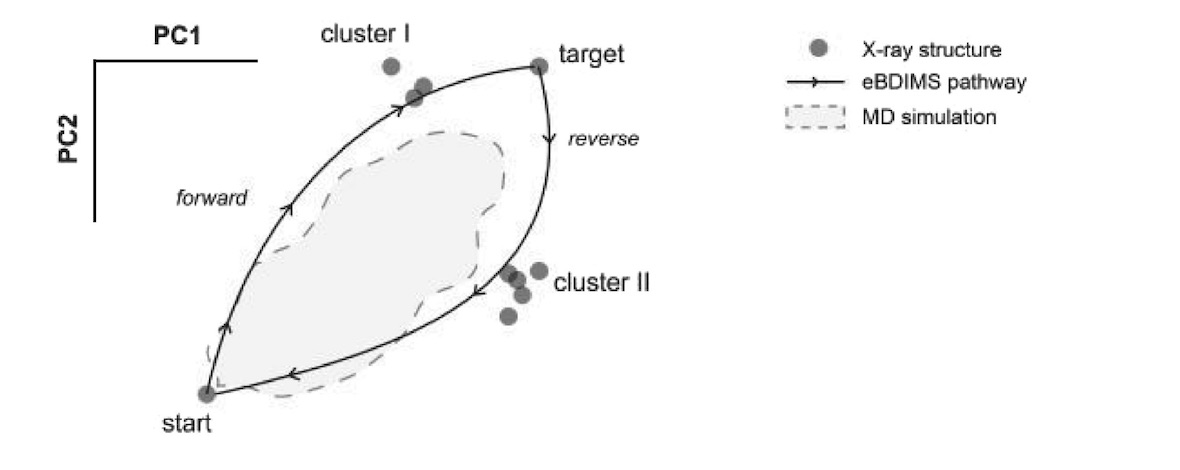
Understanding how proteins transition between different conformers, and how conformers relate to each other in terms of structure and function, is not trivial. Here, we present an online tool for transition pathway generation between two protein conformations using Elastic Network Driven Brownian Dynamics Importance Sampling, a coarse-grained simulation algorithm, which spontaneously predicts transition intermediates trapped experimentally. In addition to path-generation, the server provides an interactive 2D-motion landscape graphical representation of the transitions or any additional conformers to explore their structural relationships.

Read the full publication here.

Publications

Reproducibility rules

Released 17 January 2019 in PLOS Computational Biology (v. 15 art. e1006649):

Ten simple rules on how to create open access and reproducible molecular simulations of biological systems

Arne Elofsson, Berk Hess, Erik Lindahl, Alexey Onufriev, David van der Spoel, Anders Wallqvist

All PLOS journals have an open data policy that, amongst other things, states that all data and related metadata underlying the findings reported in a submitted manuscript should be deposited in an appropriate public repository, or for smaller datasets, as supporting information. This should obviously apply to computational methods as well, but unfortunately this is not always applied in practice, although it is of greatest importance for the scientific quality of simulations and other modeling projects.

Molecular dynamics and other type of simulations have become a fundamental part of life sciences. The simulations are dependent on a number of parameters such as force fields, initial configurations, simulation protocols, and software. Researchers have different opinions about the types of software they prefer, and in general, we believe authors should be free to choose the tools that best fit their needs. However, as scientists, we also have a common obligation to critically test each other’s statements to find mistakes (including errors in the algorithms and bugs in the code), which can be exemplified by a heated debate over simulations of supercooled water that ended up being due to a subtle algorithmic issue, and we believe PLOS has a particularly strong responsibility to lead this development even if it might cause some short-term grief.

In particular, all published results should, in principle, be possible to reproduce independently by scientists in other labs using different tools. To ensure this, we propose a set of standards that any publication in PLOS Computational Biology, and hopefully, publications in other journals as well, should follow. We do believe that the sooner such policies are widely adapted, the more open and collaborative science will flourish.

These 10 simple rules should not be limited to molecular dynamics but also include Monte Carlo simulations, quantum mechanics calculations, molecular docking, and any other computational methods involving computations on biological molecules.

Read the full publication here.

Publications

e-Science in Scandinavia

From the December 2018 release of Informatik Spektrum (v. 41 pp. 398–404):

e-Science in Scandinavia: The Case of the Swedish e-Science Research Center

Olivia Eriksson, Erwin Laure, Erik Lindahl, Dan Henningson & Anders Ynnerman

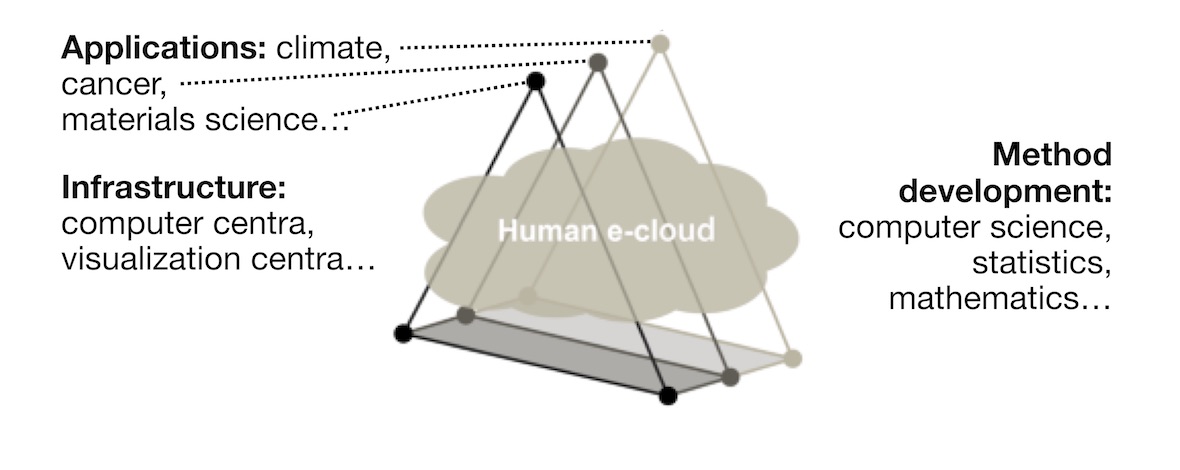
The Swedish e-Science Research Centre (SeRC) is based on a collaboration between four Swedish universities: The KTH Royal Institute of Technology (KTH), Stockholm University (SU), Karolinska Institutet (KI) and Linköping University (LiU). SeRC’s mission statement is to develop state-of-the-art eScience tools and provide e-infrastructure support to existing and emerging e-Science research communities to help bring about scientific breakthroughs in Sweden. SeRC was founded in 2010 as the result of the Strategic Research Area (SRA) initiative launched by the Swedish Government Bill on Research Policy in 2008, where a total of 24 different strategic research areas were defined – one of which was e-Science. Initially SeRC was granted funding for 5 years. During those first 5 years, SeRC built up an organization for e-Science research, which has been highly successful. This was reflected in the excellent grades that SeRC received when the SRAs in Sweden were evaluated in 2015, and the fact that after this, SeRC received funding for at least 5 more years. This new phase of SeRC partly focuses on activities relating to emerging technologies (such as exascale systems and data-driven science) while also consolidating SeRC’s ongoing efforts in working towards a long-lasting e-Science environment in Sweden.

Read the full publication here.
Publications

RELION Refined

Accepted manuscript, posted ahead of online November 9, 2018 in eLife (v. 7 art. e42166):

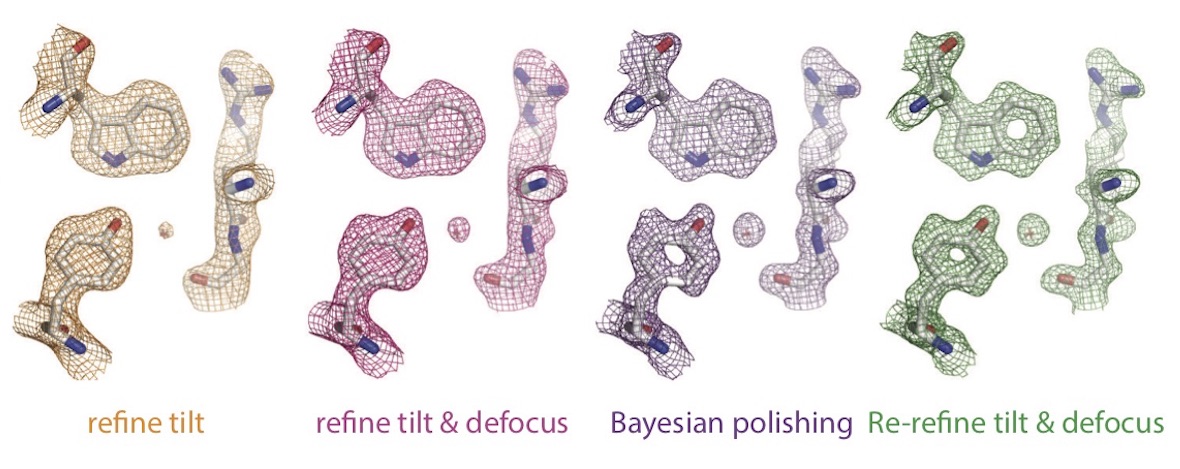
New tools for automated high-resolution cryo-EM structure determination in RELION-3

Jasenko Zivanov, Takanori Nakane, Björn O Forsberg, Dari Kimanius, Wim JH Hagen, Erik Lindahl & Sjors HW Scheres

Here, we describe the third major release of RELION. CPU-based vector acceleration has been added in addition to GPU support, which provides flexibility in use of resources and avoids memory limitations. Reference-free autopicking with Laplacian-of-Gaussian filtering and execution of jobs from python allows non-interactive processing during acquisition, including 2D-classification, de novo model generation and 3D-classification. Per-particle refinement of CTF parameters and correction of estimated beam tilt provides higher-resolution reconstructions when particles are at different heights in the ice, and/or coma-free alignment has not been optimal. Ewald sphere curvature correction improves resolution for large particles. We illustrate these developments with publicly available data sets: together with a Bayesian approach to beam-induced motion correction it leads to resolution improvements of 0.2–0.7 Å compared to previous RELION versions.

Read the full publication here.
Publications

Dynamic Basis for Drug Binding

From the October 16, 2018 issue of Proceedings of the National Academy of Sciences of the USA (v. 115 pp. 10672–10677):

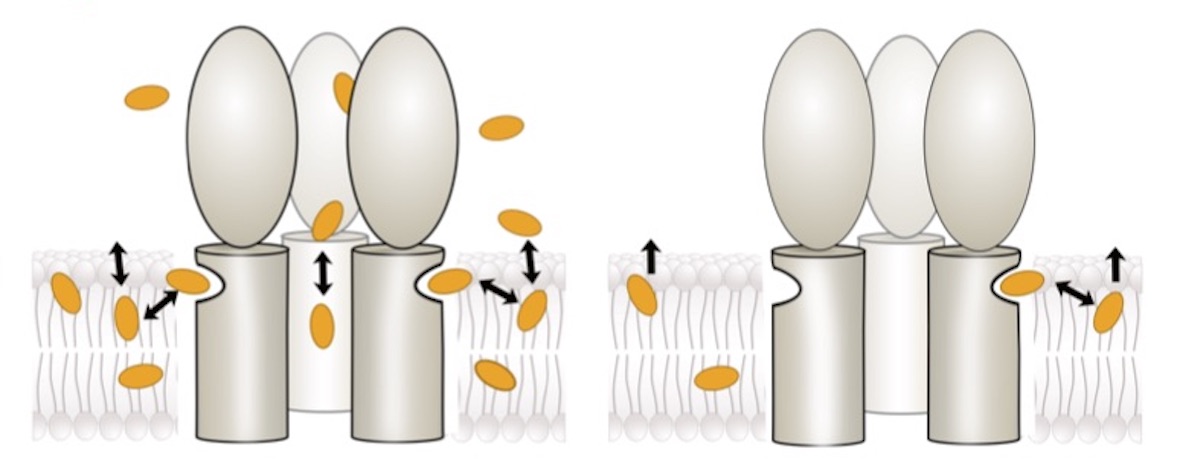
Allosteric potentiation of a ligand-gated ion channel is mediated by access to a deep membrane-facing cavity

Stephanie A Heusser, Marie Lycksell, Xueqing Wang, Sarah E McComas, Rebecca J Howard & Erik Lindahl

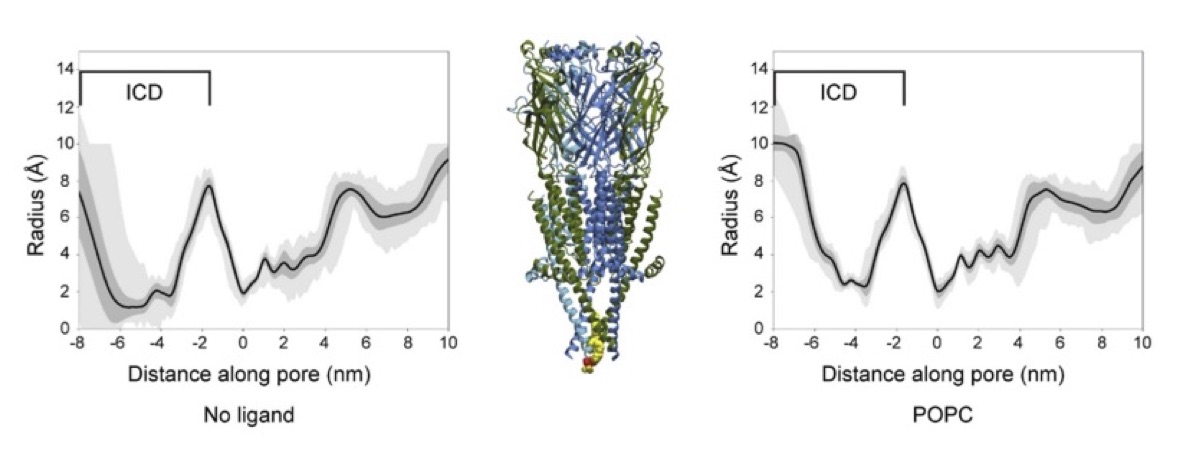
Molecular mechanisms of general anesthetic modulation in pentameric ligand-gated ion channels remain controversial. Here we present molecular simulations and functional data that reveal correlations between dynamic differences in a membrane-accessible cavity and dramatic anesthetic effects, separate inhibitory and potentiating effects within the same electrophysiology recordings, and support a model for communication between the lipid bilayer and ion channel pore. In particular, enhanced electrostatic interactions in the membrane-accessible site were associated with a unique mode of anesthetic potentiation, persisting tens of minutes after washout. These results offer a bridge between lipid- and receptor-based theories of anesthesia, with the potential to inform both mechanistic understanding and drug development.

Read the full publication here.