News

News

Back at Biophysics

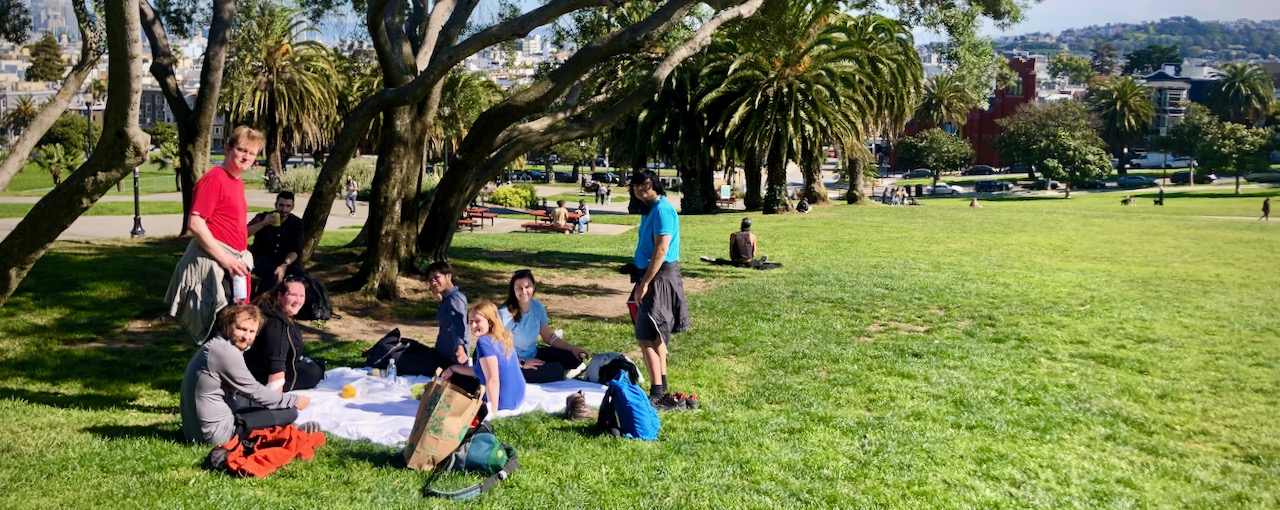
Twelve members of Molecular Biophysics Stockholm traveled to San Francisco, CA to present their research at the 66th Annual Meeting of the Biophysical Society, back on-site after a remote meeting in 2021. Among others, Lucie Delemotte spoke in and chaired the Symposium on Peripheral Membrane Proteins, Anton Jansen spoke in the Platform on Molecular Dynamics (II), and Erik Lindahl spoke in and co-chaired the Platform on Computational Methods and Bioinformatics (I). Cathrine Bergh was an invited speaker in the Platform on Protein-Lipid Interactions, with her talk delivered by Urška Rovšnik due to COVID-19 infection; Koushik Choudhury and Yuxuan Zhuang were invited speakers in the Platforms on Voltage-Gated Channels (I) and Ligand-Gated Ion Channels (II), though both talks were delivered by Reba Howard due to travel limitations. 

News

Winter Walk

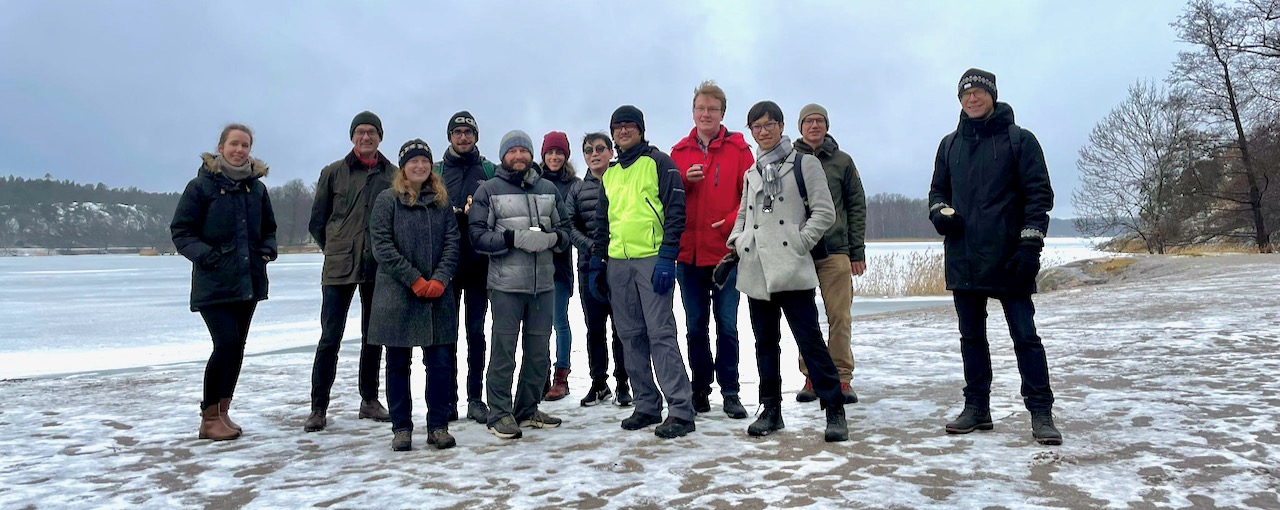
Members of Molecular Biophysics Stockholm braved the winter weather on 8 February for an afternoon hike around Brunnsviken, a couple kilometers east of our SciLifeLab campus. Though we look forward to being able to socialize indoors, we are privileged to work so close to such beautiful and accessible spots.

Publications

Pi-Bulge to Open

Published 4 January 2022 in Biophysical Journal (doi 10.1016/j.bpj.2021.12.010):

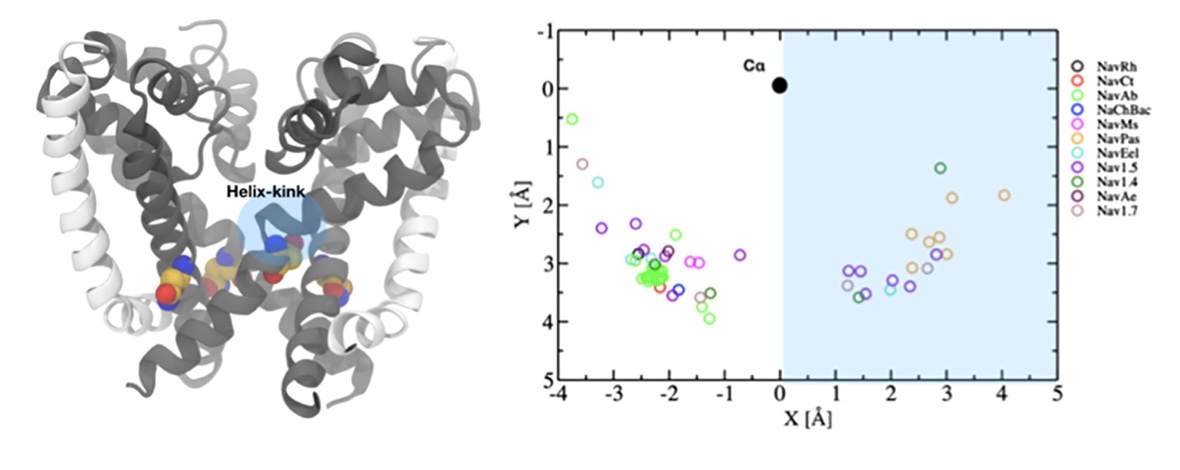
An open state of a voltage-gated sodium channel involving a π-helix and conserved pore-facing asparagine

Koushik Choudhury, Marina A Kasimova, Sarah McComas, Rebecca J Howard, Lucie Delemotte

Voltage-gated sodium (Nav) channels play critical roles in propagating action potentials and otherwise manipulating ionic gradients in excitable cells. These channels open in response to membrane depolarization, selectively permeating sodium ions until rapidly inactivating. Structural characterization of the gating cycle in this channel family has proved challenging, particularly due to the transient nature of the open state. A structure from the bacterium Magnetococcus marinus Nav (NavMs) was initially proposed to be open, based on its pore diameter and voltage-sensor conformation. However, the functional annotation of this model, and the structural details of the open state, remain disputed. In this work, we used molecular modeling and simulations to test possible open-state models of NavMs. The full-length experimental structure, termed here the α-model, was consistently dehydrated at the activation gate, indicating an inability to conduct ions. Based on a spontaneous transition observed in extended simulations, and sequence/structure comparison to other Nav channels, we built an alternative π-model featuring a helix transition and the rotation of a conserved asparagine residue into the activation gate. Pore hydration, ion permeation, and state-dependent drug binding in this model were consistent with an open functional state. This work thus offers both a functional annotation of the full-length NavMs structure and a detailed model for a stable Nav open state, with potential conservation in diverse ion-channel families.

Read the full publication here.

Publications

From Leak to Disease

Published December 2021 in Journal of Biological Chemistry (doi 10.1016/j.jbc.2021.101355):

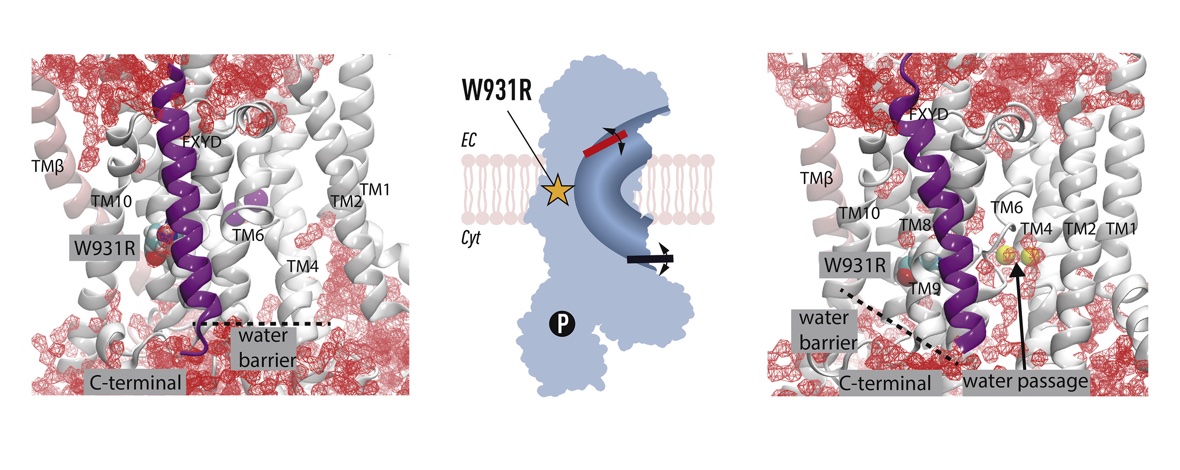
A missense mutation converts the Na+,K+-ATPase into an ion channel and causes therapy-resistant epilepsy

Sofia Ygberg, Evgeny E Akkuratov*, Rebecca J Howard*, Fulya Taylan, Daniel C Jans*, Dhani R Mahato, Adriana Katz, Paula F Kinoshita, Benjamin Portal, Inger Nennesmo, Maria Lindskog, Steven JD Karlish, Magnus Andersson*, Anna Lindstrand, Hjalmar Brismar*, Anita Aperia*

*Current and former members of the SciLifeLab biophysics community

The ion pump Na+,K+-ATPase is a critical determinant of neuronal excitability; however, its role in the etiology of diseases of the central nervous system (CNS) is largely unknown. We describe here the molecular phenotype of a Trp931Arg mutation of the Na+,K+-ATPase catalytic α1 subunit in an infant diagnosed with therapy-resistant lethal epilepsy. In addition to the pathological CNS phenotype, we also detected renal wasting of Mg2+. We found that membrane expression of the mutant α1 protein was low, and ion pumping activity was lost. Arginine insertion into membrane proteins can generate water-filled pores in the plasma membrane, and our molecular dynamic (MD) simulations of the principle states of Na+,K+-ATPase transport demonstrated massive water inflow into mutant α1 and destabilization of the ion-binding sites. MD simulations also indicated that a water pathway was created between the mutant arginine residue and the cytoplasm, and analysis of oocytes expressing mutant α1 detected a nonspecific cation current. Finally, neurons expressing mutant α1 were observed to be depolarized compared with neurons expressing wild-type protein, compatible with a lowered threshold for epileptic seizures. The results imply that Na+,K+-ATPase should be considered a neuronal locus minoris resistentia in diseases associated with epilepsy and with loss of plasma membrane integrity.

Read the full publication here.

Publications

MSMs for Proton Gating

Published 15 October 2021 in eLife (doi 10.7554/eLife.68369):

Markov state models of proton- and pore-dependent activation in a pentameric ligand-gated ion channel

Cathrine BerghStephanie A HeusserRebecca HowardErik Lindahl

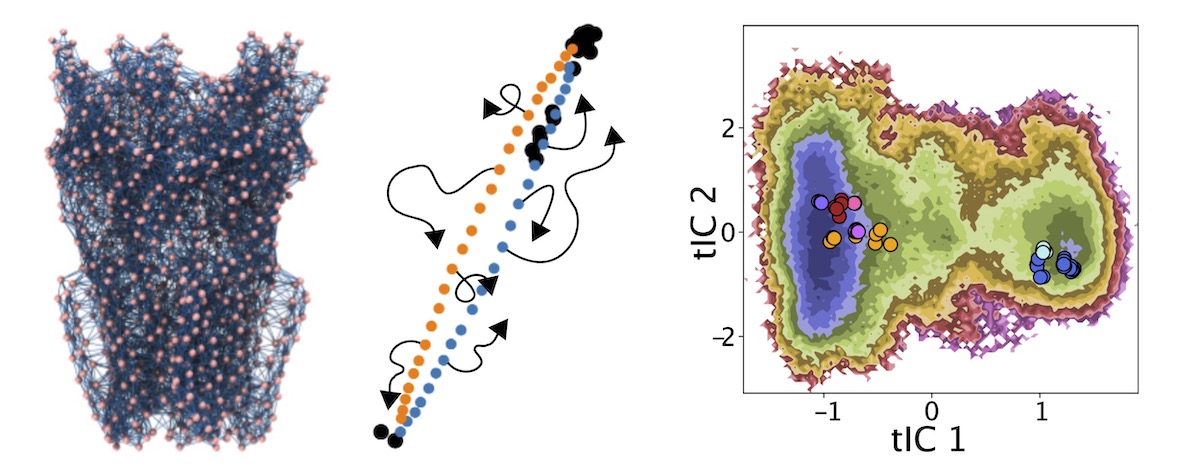
Ligand-gated ion channels conduct currents in response to chemical stimuli, mediating electrochemical signaling in neurons and other excitable cells. For many channels the details of gating remain unclear, partly due to limited structural data and simulation timescales. Here, we used enhanced sampling to simulate the pH-gated channel GLIC, and construct Markov state models (MSMs) of gating. Consistent with new functional recordings we report in oocytes, our analysis revealed differential effects of protonation and mutation on free-energy wells. Clustering of closed- versus open-like states enabled estimation of open probabilities and transition rates, while higher-order clustering affirmed conformational trends in gating. Furthermore, our models uncovered state- and protonation-dependent symmetrization. This demonstrates the applicability of MSMs to map energetic and conformational transitions between ion-channel functional states, and how they reproduce shifts upon activation or mutation, with implications for modeling neuronal function and developing state-selective drugs.

Read the full publication here.

Publications

Tracking Protons with Neutrons

Published 14 September 2021 in Proceedings of the National Academy of Sciences of the USA (doi 10.1073/pnas.2108006118):

Probing solution structure of the pentameric ligand-gated ion channel GLIC by small-angle neutron scattering

Marie LycksellUrška RovšnikCathrine Bergh, Nicolai T. Johansen, Anne Martel, Lionel Porcar, Lise Arleth, Rebecca J HowardErik Lindahl

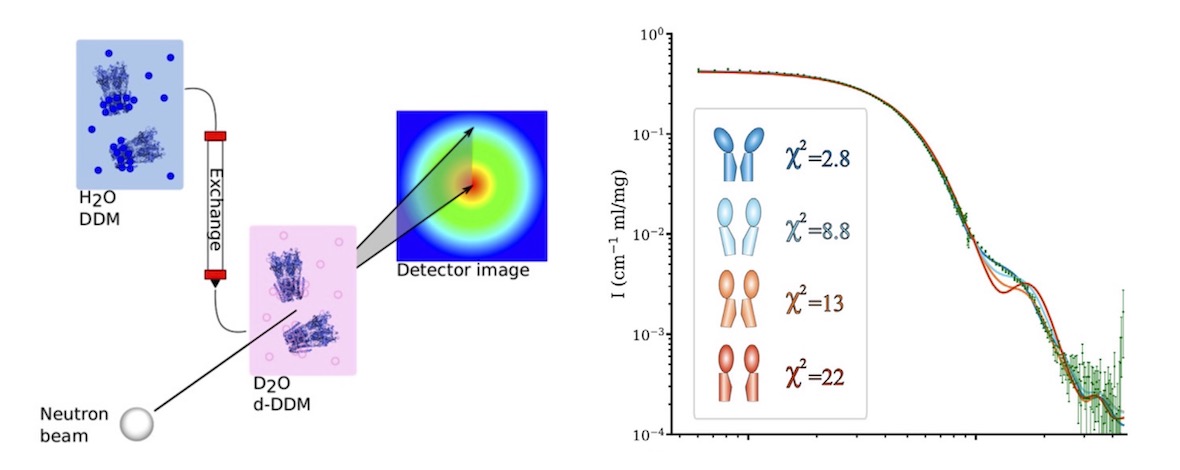
Pentameric ligand-gated ion channels undergo subtle conformational cycling to control electrochemical signal transduction in many kingdoms of life. Several crystal structures have now been reported in this family, but the functional relevance of such models remains unclear. Here, we used small-angle neutron scattering (SANS) to probe ambient solution-phase properties of the pH-gated bacterial ion channel GLIC under resting and activating conditions. Data collection was optimized by inline paused-flow size-exclusion chromatography, and exchanging into deuterated detergent to hide the micelle contribution. Resting-state GLIC was the best-fit crystal structure to SANS curves, with no evidence for divergent mechanisms. Moreover, enhanced-sampling molecular-dynamics simulations enabled differential modeling in resting versus activating conditions, with the latter corresponding to an intermediate ensemble of both the extracellular and transmembrane domains. This work demonstrates state-dependent changes in a pentameric ion channel by SANS, an increasingly accessible method for macromolecular characterization with the coming generation of neutron sources.

Read the full publication here.

News

2021 Fall Retreat

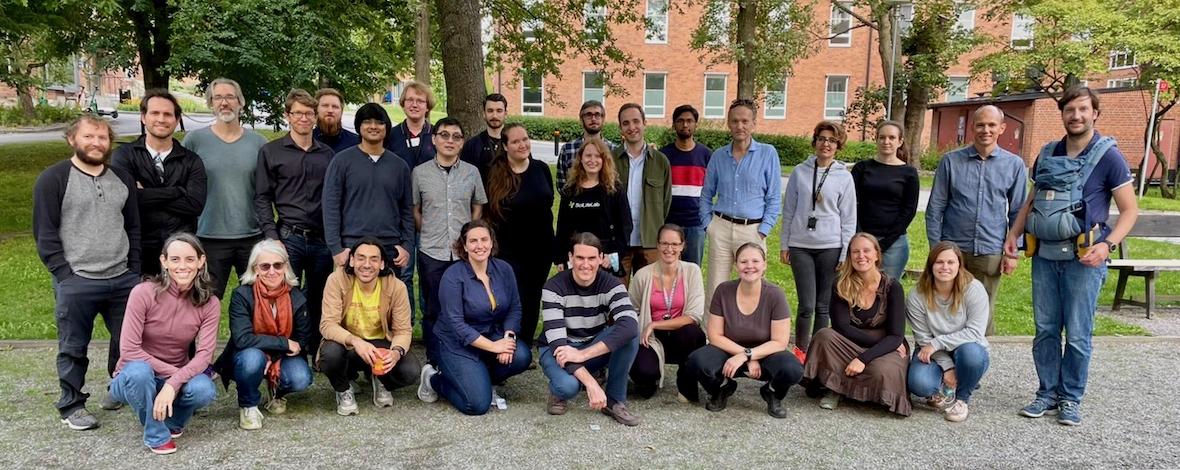
Twenty-nine members of Molecular Biophysics Stockholm, along with colleagues in the Cryo-EM Swedish Infrastructure Unit, finally gathered for an outdoor mini-retreat on 23 August 2021 on the Karolinska Institute campus. Although plans for a longer off-site event were again postponed by the ongoing COVID-19 pandemic, it was a tremendous opportunity to reconnect in person with our collegial community, including several members joined within recent months. Many thanks to co-organizers Alessandra, Michele, Anton, Reba, and especially Linnea for the afternoon activities.

Publications

Proton Gating by CryoEM

Available online 1 July 2021 in Life Science Alliance (doi 10.26508/lsa.202101011):

Dynamic closed states of a ligand-gated ion channel captured by cryo-EM and simulations

Urška RovšnikYuxuan ZhuangBjörn O Forsberg, Marta Carroni, Linnea YvonnesdotterRebecca J HowardErik Lindahl 

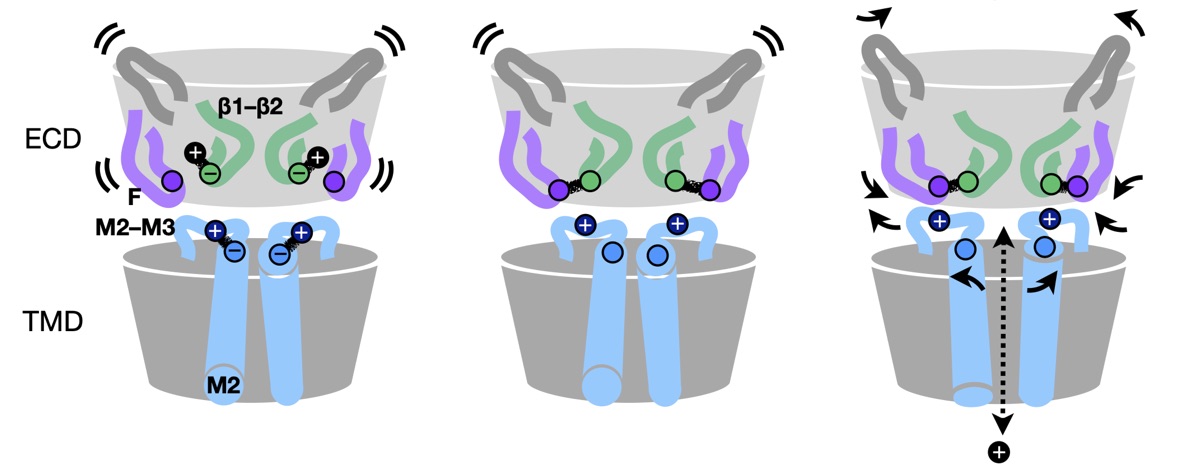
Ligand-gated ion channels are critical mediators of electrochemical signal transduction across evolution. Biophysical and pharmacological characterization of these receptor proteins relies on high-quality structures in multiple, subtly distinct functional states. However, structural data in this family remain limited, particularly for resting and intermediate states on the activation pathway. Here, we report cryo-electron microscopy (cryo-EM) structures of the proton-activated Gloeobacter violaceus ligand-gated ion channel (GLIC) under three pH conditions. Decreased pH was associated with improved resolution and side chain rearrangements at the subunit/domain interface, particularly involving functionally important residues in the β1–β2 and M2–M3 loops. Molecular dynamics simulations substantiated flexibility in the closed-channel extracellular domains relative to the transmembrane ones and supported electrostatic remodeling around E35 and E243 in proton-induced gating. Exploration of secondary cryo-EM classes further indicated a low-pH population with an expanded pore. These results allow us to define distinct protonation and activation steps in pH-stimulated conformational cycling in GLIC, including interfacial rearrangements largely conserved in the pentameric channel family.

Read the full publication here.

Publications

Illuminating pLGICs

Available online 3 July 2021 in the Journal of Molecular Biology (doi 10.1016/j.jmb.2021.167128):

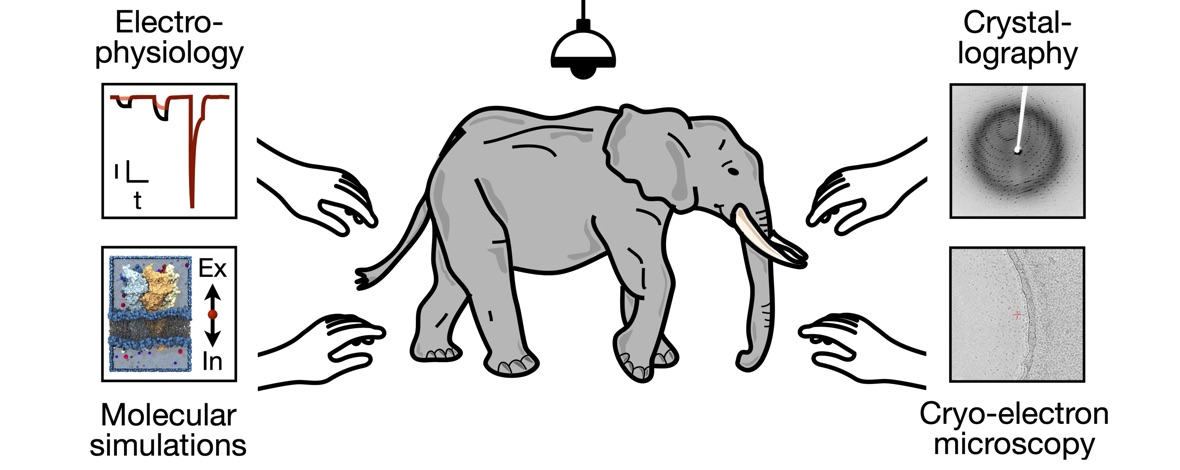
Elephants in the dark: insights and incongruities in pentameric ligand-gated ion channel models

Rebecca J Howard

The superfamily of pentameric ligand-gated ion channels (pLGICs) comprises key players in electrochemical signal transduction across evolution, including historic model systems for receptor allostery and targets for drug development. Accordingly, structural studies of these channels have steadily increased, and now approach 250 depositions in the protein data bank. This review contextualizes currently available structures in the pLGIC family, focusing on morphology, ligand binding, and gating in three model subfamilies: the prokaryotic channel GLIC, the cation-selective nicotinic acetylcholine receptor, and the anion-selective glycine receptor. Common themes include the challenging process of capturing and annotating channels in distinct functional states; partially conserved gating mechanisms, including remodeling at the extracellular/transmembrane-domain interface; and diversity beyond the protein level, arising from posttranslational modifications, ligands, lipids, and signaling partners. Interpreting pLGIC structures can be compared to describing an elephant in the dark, relying on touch alone to comprehend the many parts of a monumental beast: each structure represents a snapshot in time under specific experimental conditions, which must be understood and integrated with further structure, function, and simulations data to build a comprehensive model, and understand how one channel may fundamentally differ from another.

Read the full publication here.

News

SWEPROT in Silico

Members of Molecular Biophysics Stockholm joined colleagues in our local structural-biology community, as well as invited speakers from France, Germany, Canada, Australia, and the USA, for the 24th annual Swedish Conference on Macromolecular Structure and Function (SWEPROT) 20–23 June 2021. In contrast to previous gatherings — with the exception of 2020, which was cancelled due to COVID-19 precautions — this year’s program was relocated from its foundational Tällberg venue in central Sweden, to be hosted instead by Linköping University and Around the Corner as a Video and Virtual Reality Conference.

Congratulations especially to MBS doctoral student Marie Lycksell, who was selected among submitted abstracts to present a virtual talk on Solution structure of the pentameric ligand-gated ion channel GLIC probed by small-angle neutron scattering, and further awarded runner-up for Best Oral Presentation.